

/image%2F0394939%2F20190531%2Fob_6113d1_61425960-10216728261030327-19684367693.jpg)
guido mina di sospiro
L'ethos "ammazza-mori" della Spagna

di Guido Mina di Sospiro
tradotto da Patrizia Poli, originalmente pubblicato in inglese da New English Review con il titolo Spain’s “Moor-slaying” Ethos
[In Spagna sono pubblicato con vari libri tradotti dall’inglese, ai quali contribuisco lavorando a fianco del traduttore o dei traduttori; parlo spagnolo (castigliano) fluentemente e sono stato intervistato alla radio e alla televisione nazionali spagnole, così come dai maggiori giornali del paese; mia moglie è di discendenza spagnola (Basca, galiziana e cantabrica) e lo spagnolo è la sua madre lingua; sono un Grande di Spagna, (titolo concesso a un mio antenato da Carlo V); leggo avidamente libri in spagnolo, particolarmente un sottogenere revisionista in espansione che racconta le conquiste militari della Spagna lungo i secoli; e ho viaggiato in lungo e in largo attraverso la Spagna più che in qualsiasi altro paese europeo, Italia inclusa. Detto ciò, nel saggio seguente ho cercato di offrire al lettore un distillato: alcuni aspetti, più o meno famosi, o famigerati, che sono emblematici di un certo spirito spagnolo.]
Due enormi autobus si sono appena fermati e hanno parcheggiato vicino al santuario. Mi volto verso mia moglie e le dico, “Ci sono i cinesi! Svelta, andiamo a porgere i nostri rispetti alla Vergine finché abbiamo il posto tutto per noi.“ E che posto: Nostra Signora di Covadonga è un santuario mariano dedicato alla Vergine Maria, a Covadonga, nelle Asturie, nel nord ovest della Spagna. Le Asturie sono una regione strana che, per la maggior parte della gente, non richiama alla mente la Spagna stereotipata: un misto fra le Dolomiti e l’Irlanda, molto verde perché molto piovosa, scarsamente popolata, eccetto che per le due città principali, Oviedo e Gijon, e molto bella. È stato qui che, all’inizio del VII secolo, la nobiltà visigota si ritirò dopo essere stata sconfitta dai Mori che stavano conquistando l’intera penisola iberica. Pelagio, o Pelayo, fondò il regno delle Asturie, e quattro anni più tardi guidò ciò che restava dell’esercito visigoto contro i Mori che avanzavano, e li fronteggiò a Covadonga; una statuetta della Vergine Maria era stata segretamente nascosta in una delle grotte sopra la cascata (Cova Donga, dal latino Cova Dominica, cioè Grotta della Signora). Miracolosamente, Re Pelagio e i suoi uomini riuscirono a sconfiggere i Mori, e ogni visigoto credette che fosse stato grazie all’aiuto della Vergine. Era il 722, una data celebrata in tutta la Spagna come l’inizio della Reconquista, la Ri-conquista, che, dopo 800 anni di guerra costante, portò all’espulsione dei Mori dalla Penisola Iberica.
Come poi si è scoperto, gli autobus non erano pieni di turisti cinesi, ma di bambini delle elementari spagnole. Erano là per un pellegrinaggio che unisce il nazionalismo al marianesimo. Abbiamo sentito i loro insegnanti raccontare di Pelagio e della Vergine che lo aiutò, della nascente Spagna contro i Mori che conquistavano tutto; poi hanno spiegato che la Reconquista è nata lì; infine, non senza un certo orgoglio, hanno parlato degli otto gloriosi secoli che seguirono, ricchi di battaglie che si conclusero con l’espulsione dei Mori, con l’unificazione della Spagna, e con l’inizio della Conquista, cioè l’impero spagnolo. Come una capsula di storia e metastoria, (la fine della Reconquista coincide, quasi in modo soprannaturale, con l’inizio della Conquista nell’anno 1492), potrebbe essere risultata pesante per i bambini, ma sembravano assorbire le informazioni con attenzione. Erano silenziosi e ascoltavano. Il luogo stesso, alla fine di una lunga galleria scavata nella roccia a strapiombo, sopra una cascata sull’orlo di un precipizio, è straordinario. E la piccola statua della Vergine di Covadonga, che qualcuno potrebbe ritenere kitsch, sembrava operare la sua magia sui ragazzi (e su mia moglie e me, ma questa è un altro discorso).
Abbiamo domandato a una delle insegnanti se portare i bambini a Covadonga è qualcosa che fanno solo le scuole asturiane; ci ha risposto, “No, portano qui bambini da tutta la Spagna. È un monumento nazionale. Qui sono stati sconfitti i Mori per la prima volta; qui è dove ha avuto inizio la Reconquista.”
L’Estremadura, nell’ovest della Spagna al confine col Portogallo, è una terra di conquistatori che ha prodotto più famosi (o famigerati, a seconda del punto di vista) Conquistadores di qualsiasi altra regione della Spagna. Trujillo oggi è principalmente ricordata per due dei suoi figli: Francisco Pizarro, che conquistò l’impero Inca; e Francisco de Orellana, il primo a navigare l’intero corso del Rio delle Amazzoni, da principio chiamato Rio de Orellana: 4345 miglia verso l’ignoto. Ma ben prima di allora, Trujillo ha contribuito anche alla Reconquista.
Mentre Alfonso VIII iniziò a testare la resistenza dei Mori nell’area, fu Ferdinando III “el Santo” il monarca che, nel 1232, riconquistò Trujillo alla fede cristiana grazie a un intervento sovrannaturale: la Vergine, con in braccio il bambin Gesù, apparve sopra le mura del castello moresco, nel punto più alto della città, e perciò la battaglia fu vinta dai soldati di Alfonso VIII. Da quel momento in poi, l’intero esercito si rivolse alla Vergine col titolo “La Victoria” (la Vittoria), come santa patrona e avvocato della Reconquista. Fu messa sul trono in cima alla porta principale che porta al castello, dove fu creata una cappella per lei.
Ferdinando III “il Santo” (el Santo) – re di Castiglia dal 1217 e re di León dal 1230 come pure re di Galizia dal 1231 – fu uno dei capi militari di maggior successo durante la Reconquista. Era anche un uomo devoto, sempre pronto ad ascrivere le sue vittorie contro gli “infedeli”, sia militari sia diplomatiche, a Dio o, come mostrato, alla Vergine. Secoli dopo la sua morte, papa Clemente X lo canonizzò. La Valle di san Fernando, vicino a Los Angeles, nel sud della California, porta il suo nome.
Le feste patronali in onore di Nostra Signora della Vittoria sono tenute ancora oggi a Trujillo tra la fine di agosto e l’inizio di settembre. Contemporaneamente, ci sono festival di musica, danza e teatro. La cittadina si anima e attrae visitatori da tutta la regione. 786 anni dopo che Nostra Signora della Vittoria aiutò gli spagnoli a sconfiggere i Mori e riconquistare la città, la sua memoria continua a vivere in modo molto tangibile. Un estraneo penserebbe che Pizarro o de Orellana siano stati scelti dalla città per cantare la sua gloria. Certamente molto vien celebrato su di loro e sui Conquistatori, ma il capitolo che riguarda la Reconquista, con l’intervento, niente meno, di Nostra Signora della Vittoria, è ancora quello festeggiato e sentito di più.
Al pari di Trujillo, Zamora, in Castiglia e Leon sulle rive del Duero, è un’altra città che difficilmente sarà visitata da orde di turisti parlanti lingue misteriose. Quando ci siamo stati, abbiamo incontrato solo visitatori spagnoli, e pochissimi dal vicino Portogallo. E tuttavia, Zamora è sia una gemma sia una stranezza molto emblematica. Annovera ventiquattro chiese del XII e XIII secolo, tutte in stile romanico, così come altri edifici non religiosi nello stesso stile. Nessun’altra città al mondo è abbellita da così tante chiese romaniche – sono ovunque. Ce n’è persino una in miniatura (non del tutto) nel centro della plaza mayor .
Durante i secoli della dominazione moresca nella penisola iberica, Zamora, allora alla periferia del regno delle Asturie, divenne una roccaforte strategica per la Reconquista dei Cristiani. Dall’inizio dell’ottavo secolo fino alla fine del decimo, cambiò di mano dai Cristiani ai Mori attraverso feroci contrasti militari; furono costruiti edifici difensivi e ogni sorta di fortificazione. Durante il dodicesimo secolo il combattimento s’intensificò. La città, in quel momento parte del regno di Leon, fu finalmente riconquistata e tolta agli Almoravidi e Almohadi. Fu allora che si decise di popolare la città di cristiani provenienti da altri centri, e costruire un numero impressionante di chiese, tutte più o meno nello stesso momento e perciò tutte nello stile corrente, il romanico. La straordinaria, grande ed estremamente composita cattedrale fu costruita in soli ventitré anni.
Mentre si viaggia da nord a sud, le chiese in Spagna diventano più “recenti”, poiché quest’ultima regione fu riconquistata più tardi. In nessun altro luogo più che a Zamora è evidente che la costruzione delle chiese era più di una affermazione religiosa; implicava, in modo abbastanza esplicito, il trionfo sugli “infedeli” e la costruzione della nazione. Liberando città dopo città dalla dominazione moresca, la Spagna gradualmente divenne la Spagna. Con l’eccezione di alcune chiese preromaniche nelle Asturie, quasi ogni chiesa in Spagna è una testimonianza della Reconquista. La Spagna visigota era cristiana (all’inizio ariana, poi, dopo che Recaredo, il re visigoto di Toledo, si convertì al cattolicesimo nel 587 d.c., ci fu un tentativo mai riuscito di cattolicizzare l’intera penisola iberica) e produsse alcune chiese. Ma poi i Mori o le trasformarono in moschee o le distrussero, così, una volta riconquistato il territorio, molte chiese dovettero essere costruite da zero oppure le moschee convertite in chiese.
La Galizia, una vasta e verdeggiante sotto-regione di montagne, colline, rias, (cioè piccole baie, estuari e fiordi), oceano, spagnoli di origine celtica e zampogne, è dove si trova Santiago di Compostela. Nel mio libro La metafisica del ping pong scrivo: “... per festeggiare il mio quarantesimo compleanno in un luogo mitico che avevo sempre desiderato visitare, mi ero imbarcato nel pellegrinaggio alla cattedrale di San Giacomo, a Santiago di Compostela, insieme a mia moglie. Era stato un incredibile pellegrinaggio di cinquanta metri – quanti ne distava l’albergo dalla cattedrale – percorsi tutti a piedi e senza alcuna sosta, malgrado il tempo inclemente: un’acquerugiola.” A dispetto della mia leggerezza, Santiago de Compostela è uno dei più importanti santuari della cristianità, e di gran lunga il più famoso pellegrinaggio del mondo occidentale. Decine di migliaia di pellegrini di tutte le nazionalità e di tutte le fedi (incluso nessuna) percorrono faticosamente ogni anno il cammino di Santiago, dalla Francia, o dal Portogallo, o da qualsiasi altro posto in Spagna, centinaia di chilometri a piedi. Se ce la fanno, alla fine raggiungono la Plaza de Obradoiro [la piazza della (completata) opera d’oro, un appellativo con chiare sfumature alchemiche], dove sorge la grandiosa cattedrale. Molti, se non la maggior parte, dei pellegrini rimangono scioccati quando, una volta entrati nella cattedrale, s’imbattono nella statua di Santiago (San Giacomo) a cavallo di un destriero bianco che brandisce una spada. Non sanno che, dietro il verde provvidenzialmente collocato per decisione della chiesa cattolica, ci sono statue di Mori che si contorcono sul terreno mentre vengono trucidati dal santo. L’iconografia di Santiago, con la quale tutti diventano familiari, è quella di un primigenio hippy vagabondo, barbuto e comprensibilmente arruffato, con un bastone da passeggio, un ampio cappello e la distintiva conchiglia (che i francesi chiamano coquille Saint-Jacques, per la precisione). Sembra uscito da una comune hippy dei tardi anni sessanta. Dentro la cattedrale, d’altro canto, i pellegrini contemporanei s’incontrano con quest’altro Santiago, il Matamoros, letteralmente, san Giacomo ammazza-Mori.
Giacomo era uno dei dodici apostoli di Gesù, ed è considerato il primo apostolo a essere stato martirizzato. È il santo patrono sia degli spagnoli sia dei portoghesi, chiamato rispettivamente Santiago o São Tiago. Il suo mito come guerriero dalla parte dei cristiani contro i musulmani deriva da quella che sembra essere una finta battaglia, presumibilmente combattuta vicino a Clavijo, tra i cristiani, guidati da Ramiro I delle Asturie, e i musulmani, guidati dall’emiro di Cordoba. In essa, Santiago Matamoros (ammazza-Mori) apparve all’improvviso e aiutò un esercito cristiano in minoranza numerica a raggiungere la vittoria. La data assegnata alla battaglia, l’834, fu più tardi cambiata in 844 per adattarsi a dettagli storici più plausibili.
Sebbene nata da un incidente che, nella migliore delle ipotesi, è spurio, la storia del culto di Santiago procede di pari passo con la storia della Reconquista, e incarna una delle più formidabili icone ideologiche dell’identità nazionale spagnola. “iSantiago y cierra, Espana!” e cioè, “Santiago e addosso, Spagna!” o “Santiago e contro di loro, Spagna!” divenne il grido di battaglia degli eserciti spagnoli che combattevano contro i Mori [e continuò a essere usato, più tardi, dai Conquistatori, con Santiago Matamoros opportunamente trasformato in Santiago Mataindios (ammazza-indiani), ma questa è un’altra storia]. L’Orden de Santiago, cioè l’ordine di San Giacomo della spada, fu fondato nel dodicesimo secolo. Il suo scopo era proteggere i pellegrini del Camino de Santiago, difendere la cristianità, ed espellere i mori dalla penisola iberica. Il suo emblema era la cruz espada, la croce di San Giacomo, cioè una croce che somiglia molto a una spada. Infine, Santiago fu un tema importante delle arti, nella pittura come nella scultura, e si trova in un’infinità di chiese, palazzi e musei in tutta la spagna contemporanea.
Entrando finalmente nell’impressionante cattedrale di Santiago di Compostela, la maggior parte dei pellegrini sono stupiti nel vedere Santiago trasformato dal classico vagabondo in un ammazza-mori che brandisce la spada. Nel 2004, poco dopo l’attentato al treno di Madrid, l’attacco terroristico di Al-Qaeda che sterminò 192 persone e ne ferì circa 2000, la chiesa cattolica decise di rimuovere la statua di Santiago Matamoros dalla cattedrale, per non offendere la sensibilità dei musulmani (tardivamente?). Ci fu un sollevamento popolare contro tale rimozione, e si trovò un compromesso, coprendo di piante i mori uccisi, cosa che è stata mantenuta fino ad oggi. I pellegrini, siano essi cattolici, agnostici, umanitari o ipertolleranti globalisti politically correct, pensano che niente potrebbe essere più contrario agli insegnamenti di Gesù dell’idea che uno dei suoi discepoli venga glorificato come assassino. Probabilmente nessuno ha detto loro delle lettere di Bernardo di Chiaravalle ai Templari, o Liber ad milites templi de laude novae militiae (Libro dei cavalieri del Tempio, in lode del a nuova milizia), scritte fra il 1120 e il 1136.
San Bernardo scrisse tale lettera/libro per i cavalieri templari demoralizzati, che nutrivano seri dubbi sul ruolo dei guerrieri cristiani, specialmente riguardo all’atto dell’ammazzare, che consideravano non etico. Dimostrando la sua eloquenza, e partendo dalla premessa della teoria della guerra giusta di Agostino di Ippona (jus bellum iustum), San Bernardo, nel suo libro, introdusse il concetto di mali-cidium (l’uccisione del male). I Milites Christi, i guerrieri di Cristo, non potevano commettere homi-cidum (omicidio, alla lettera uccisione dell’uomo), che è proibito dal quinto comandamento. Ma, siccome il bene superiore dello sradicamento del male lo richiedeva, il malicidium del musulmano “infedele” (l’uccisione del male dentro di lui) era giustificata.
Nel medioevo ogni sorta di divinità cristiana fu reclutata per il bene delle Crociate e, in Spagna, ben prima di allora, anche della Reconquista: Santo Cristos de las Batallas (Santo Cristo delle battaglie, tutt’oggi un culto molto seguito particolarmente a Salamanca, Avila, e Cáceres), portato in forma di statua sui campi di battaglia quando si combattevano i Mori; la Vergine, in varie apparizioni (ho menzionato quella decisivo a Covadonga, e un’altra a Trujillo); così come, ovviamente, Santiago Matamoros.
Mentre la chiesa cattolica era occupata a mantenere la sua cortina di verzura alla base della statua di Santiago Matamoros, è avvenuto l’attacco di Barcellona, che ha ucciso 13 persone e ne ha ferite almeno 130, la cui indiretta responsabilità è stata attribuita allo stato islamico dell’Irak e del Levante (ISIL)
Dato il suo passato, dato il fatto che la Reconquista è vivamente commemorata fino ad oggi in tutto il paese, e il suo fondamentale significato inculcato nelle menti di tutti i cittadini a partire dai bimbi delle elementari, trovate la correttezza politica occidentale, che sfiora la tolleranza ad ogni costo, adatta o non adatta alla Spagna?
I am published in Spain with various books in translation from the English, to which I contribute by working alongside the translator(s); I speak Spanish (Castilian) fluently and have been interviewed on Spanish national radio and television, as well as by the country’s major newspapers; my wife is of Spanish descent (Basque, Galician and Cantabrian) and Spanish is her mother tongue; I am a Grandee of Spain (a title bestowed upon an ancestor of mine by Charles the Fifth); I avidly read books in Spanish, particularly in a burgeoning revisionist subgenre that recounts Spain’s military feats down the centuries; and I have traveled across Spain more than across any other country in Europe, Italy included. Having said that, in this essay I have endeavored to offer to the anglophone reader a distillate: a few aspects, more or less famous, or notorious, that are emblematic of a certain Spanish spirit.
Two huge buses have just pulled up and parked near the sanctuary. I turn to my wife and say, “The Chinese are here! Quick, let’s go pay our respects to the Virgin while we’ve got the place ourselves.” And what a place: Our Lady of Covadonga is a Marian shrine devoted to the Virgin Mary at Covadonga, Asturias, in north-west Spain. Asturias is strange region that for most people does not call to mind stereotypical Spain: a mix between the Dolomites and Ireland, it is very green because it is very rainy, sparsely populated except for its two main cities, Oviedo and Gijon, and very beautiful. It was here that, at the outset of the 7th century, the Visigothic nobility retreated after being defeated by the Moors, who were conquering the entire Iberian Peninsula. Pelagius, or Pelayo, founded the Kingdom of Asturias and four years later led what was left of the Visigothic army against the advancing Moors, and met them at Covadonga; a small statue of the Virgin Mary had been secretly hidden in one of the caves above the waterfall (Cova Donga, from the Latin Cova Dominica, i.e., Cave of the Lady). Miraculously, King Pelayo and his men managed to defeat the Moors, and every Visigoth believed it was thanks to the aid of the Virgin. It was 722, a date that is celebrated all over Spain as the beginning of the Reconquista, the Re-conquest, which, after eight hundred centuries of constant fighting, led to the expulsion of the Moors from the Iberian Peninsula.
As it turned out, the buses were not full of Chinese tourists, but of Spanish elementary school children. They were there on a pilgrimage that unites nationalism with Marianism. We overheard their teachers tell them about Pelayo and the Virgin who helped him, and nascent Spain, against the all-conquering Moors; next they explained that the Reconquista was born there; finally, not without pride, they elaborated about the eight glorious centuries that followed, rich in battles, resulting in the expulsion of the Moors, in unified Spain, and in the beginning of the Conquista, and that is, the Spanish Empire. As a capsule of history and metahistory (the end of the Reconquista coincides almost preternaturally with the beginning of the Conquista in the year 1492), one would have thought that it might be overwhelming for the children, but they took the information in stride. They were quiet, and listening. The place itself, at the end of a long tunnel dug into sheer rock, over a waterfall above a precipice, is stunning. And the little statue of the Virgin of Covadonga, which some may qualify as kitsch, seemed to work her magic on the children (and on my wife and me, but that’s beside the point).
We asked one of the teachers if taking the children to Covadonga was something done only by Asturian schools; she replied, “No, school children are taken here from all over Spain. It’s a national monument. The Moors were defeated here for the first time; this is where the Reconquista began.”
Extremadura, in Western Spain at the border with Portugal, is a land of Conquistadors that produced more famous (or notorious, depending on one’s view) Conquistadores than any other region in Spain. Trujillo is today chiefly remembered for two of its sons: Francisco Pizarro, who conquered the Inca Empire; and Francisco de Orellana, the first to navigate the entire length of the Amazon River, at first named Rio de Orellana: 4,345 miles into the unknown. But well before their time, Trujillo contributed also to the Reconquista.
While Alfonso VIII began to test the resistance of the Moors in the area, it was Fernando III “el Santo” the monarch who, in 1232, re-conquered Trujillo to the Christian faith thanks to a supernatural intervention: the Virgin, holding baby Jesus in her arms, appeared above the walls of the Moorish castle situated at the highest point in town, and thereafter the battle was won by Fernando III’s soldiers. From that moment on, the whole army addressed the Virgin with the title “La Victoria” (The Victory), as the patron saint and advocate of the Reconquista. She was enthroned on top of the main door that leads into the castle, and a chapel in it was created for her.
Ferdinand III “the Saint” (el Santo)—King of Castile from 1217 and King of León from 1230 as well as King of Galicia from 1231—was one of the most effective military leaders in the Reconquista. He was also a pious man, ever willing to ascribe his victories against the “infidels”, be they military or diplomatic, to God or, as illustrated, to the Virgin. Centuries after his death, Pope Clement X canonized him. The San Fernando Valley, near Los Angeles, in Southern California, is named after him.
The patron saint festivities in honor of Our Lady of Victory are held to this day in Trujillo between the end of August and the beginning of September. At the same time, there are festivals of music, dance, and theater. The small town comes alive and attracts visitors from all over the region. 786 year after Our Lady of Victory helped the Spaniards defeat the Moors and re-conquer the city, her memory lives on in a very tangible way. An outsider would think of either Pizarro or de Orellana as being chosen by the town to sing its own glory. To be sure, much is made about them and the Conquistadors, but the chapter pertaining to the Reconquista, with the intervention of Our Lady of Victory, no less, still is the one that is celebrated, and felt, the most.
Like Trujillo, Zamora, in Castilla y León on the banks of the Duero, is another town unlikely to be visited by hordes of tourists speaking mysterious languages. When we were there, we only came across Spanish visitors, and a very few from nearby Portugal. And yet, Zamora is both a gem and a highly emblematic oddity. It numbers twenty-four churches from the 12th and 13th century, all in Romanesque style, as well as some other non-religious buildings in the same style. No other city in the world is graced with as many Romanesque churches—they are everywhere. There is even a diminutive one (not quite) in the center of the plaza mayor.
During the centuries of Moorish rule in the Iberian Peninsula, Zamora, then at the periphery of the Kingdom of Asturias, became a strategic stronghold for the Christians’ Reconquista. From the early 8th century to the late 10th century it was a city changing hands from Christians to Moors through fierce military engagements; defensive buildings and all sorts of fortifications were built. During the 12th century, the fighting intensified. The city, by then part of the Kingdom of León, was finally re-conquered from the Almoravids and the Almohads. It was then that it was decided to populate the city with Christians from other towns, and build an impressive number of churches, all more or less at the same time and therefore all in the then current style, the Romanesque. The stunning, large and extremely composite cathedral was built in only twenty-three years.
As one journeys from north to south, churches in Spain become more “recent”, as the latter region was re-conquered later. Nowhere more than in Zamora is it evident that church-building was more than a religious statement; it implied, quite explicitly, triumph over the “infidels” and nation-building. By liberating city after city from Moorish domination, Spain gradually became Spain. With the exception of a few pre-Romanesque churches in Asturias, almost every church in Spain is a testament to the Reconquista. Visigothic Spain was Christian (at first Arian; then, after Reccared, the Visigothic king in Toledo, converted to Catholicism in 587AD, there was a never completely successful attempt to Catholicize the entire Iberian Peninsula) and did produce some churches. But then the Moors either turned them into mosques or tore them down, so, once the territory was re-conquered, most churches had to be built from scratch, or mosques would be converted into churches.
Galicia, a vast and green sub-region of mountains, hills, rías (i.e., inlets, estuaries, fiords), ocean, Spaniards of Celtic heritage and bagpipes, is where Santiago de Compostela is found. In my book The Metaphysics of Ping-Pong I note: “To celebrate my fortieth birthday and go to a mythical place I’d always wanted to see, I too had embarked on the pilgrimage to St James’s Cathedral, in Santiago de Compostela, with my wife. It’d been an incredible fifty yards, from the hotel straight to the cathedral, nonstop and all on foot despite the inclemency of the weather: a drizzle.” Notwithstanding my levity, Santiago de Compostela is one of the most important shrines in Christendom, and far and away the most celebrated pilgrimage in the western world. Tens of thousands of pilgrims of all nationalities and all faiths (including none) trudge every year along the Camino de Santiago, from France, or Portugal, or elsewhere in Spain, hundreds of kilometres on foot. If they make it, they eventually reach the Praza do Obradoiro (the Square of the [completed] Work of Gold, an appellation with distinct alchemical overtones), where the grandiose Cathedral stands. Many if not most pilgrims are shocked when, once inside the cathedral, they come across a statue of Santiago (St. James) mounted on a white horse and wielding a sword. Little do they know that behind the greenery providentially placed there by decision of the Catholic Church, are the statues of writhing Moors on the ground being slaughtered by the saint. The iconography of Santiago all pilgrims become familiar with along the way is that of the prototypical wandering hippy, bearded and understandably a little dishevelled, with a walking stick, a large hat and the distinctive scallop on it (which the French call coquille Saint-Jacques, precisely). He looks straight out of a hippy commune in the late 1960s. Inside the cathedral, on the other hand, the contemporary pilgrims meet with that other Santiago—Matamoros, literally, St. James the Moor-slayer.
James was one of the twelve apostles of Jesus and is considered the first apostle to be martyred. He is the patron saint of both Spaniards and Portuguese, respectively called Santiago or São Tiago. His myth as a warrior on the side of the Christians against the Muslims derived from what seems to be a fictional battle allegedly fought near Clavijo between the Christians, led by Ramiro I of Asturias, and the Muslims, led by the Emir of Córdoba. In it, Santiago Matamoros (the Moor-slayer) appeared suddenly and helped an outnumbered Christian army to gain victory. The date assigned to the battle, 834, was later changed to 844 to suit more plausible historical details.
Although born out of an incident that is spurious at best, the history of the cult of Santiago goes hand in hand with the history of the Reconquista, and incarnates one of most formidable ideological icons in Spain’s national identity. “¡Santiago y cierra, España!” and that is, “Santiago and close, Spain!” or “Santiago and at them, Spain!” became the battle cry of Spanish armies when fighting against the Moors (and continued to be used, later on, by the Conquistadors, with Santiago Matamorors morphing opportunely into Santiago Mataindios [Indian-slayer], but that’s another story). The Orden de Santiago, i.e., the Order of St. James of the Sword, was founded in the 12th century. Its aim was to protect the pilgrims of the Camino de Santiago, to defend Christendom, and to expel the Moors from the Iberian Peninsula. Its emblem was the cruz espada, the Cross of St. James, and that is, a cross that looks very much like a sword. Lastly, Santiago was a major theme in the arts, in paintings and sculptures alike, and is found in countless churches, palaces and museums all over contemporary Spain.
Upon entering at long last the overwhelming cathedral of Santiago the Compostela, most pilgrims are astonished to see Santiago transformed from the prototypical wanderer to a sword-wielding Moor-slayer. In 2004, shortly after the Madrid train bombings (or 11-M), the Al-Qaeda terrorist attack that killed 192 people and injured around 2,000, the Catholic Church decided to remove the statue of Santiago Matamoros from the cathedral, not to offend the sensitivity of Muslims (belatedly?). There was a popular uproar against such a removal, and the compromise was found of covering the slain Moors with greenery, which is kept up to this day. Pilgrims, be they Catholics, agnostics, humanitarians or politically correct hypertolerant globalists feel that nothing could be more contrary to the teachings of Jesus than the idea that one of his disciples would be glorified as a murderer. Nobody must have told them about St. Bernard of Clairvaux’s letter to the Templars, or Liber ad milites templi de laude novae militiae (Book to the Knights of the Temple, in Praise of the New Knighthood), written between 1120 and 1136.
St. Bernard wrote that letter/book for the demoralized Knights Templar, who were having serious doubts about the role of Christian warriors, and especially about the act of killing, which they deemed unethical. Displaying his eloquence, and starting from the premise of Augustine of Hippo’s just war theory (jus bellum iustum), St. Bernard introduced in his book the concept of mali-cidium (the killing of evil). The Milites Christi, the warriors of Christ, could not commit homi-cidum (homicide, literally the killing of man), which is forbidden by the fifth commandment. But since the higher good of the eradication of evil demanded it, the malicidium within the Muslim “infidel” (the killing of evil inside him) was justified.
In the Middle Ages, all sorts of Christian divinities were recruited for the sake of the Crusades and, in Spain, well before that time, of the Reconquista: Santo Cristo de las Batallas (Holy Christ of the Battles, to this day a very followed cult particularly in Salamanca, Ávila, and Cáceres), carried as a statue in battlefields when fighting against the Moors; the Virgin, in various incidents (I have mentioned the seminal one at Covadonga, and another at Trujillo); as well as, of course, Santiago Matamoros.
While the Catholic Church was busy keeping its curtains of greenery around the base of the statue of Santiago Matamoros, there occurred the Barcelona Attacks, that killed 13 people and injured at least 130 others, whose indirect responsibility was attributed to the Islamic State of Iraq and the Levant (ISIL).
Given its past, given the fact that the Reconquista is vividly commemorated to this day all over the country and its fundamental significance inculcated into the minds of all citizens starting with elementary school children, do you find the western political correctness trespassing into tolerance à outrance well- or ill-suited to Spain?


La cultura occidentale nel 2000
Di Guido Mina di Sospiro - tradotto da Patrizia Poli
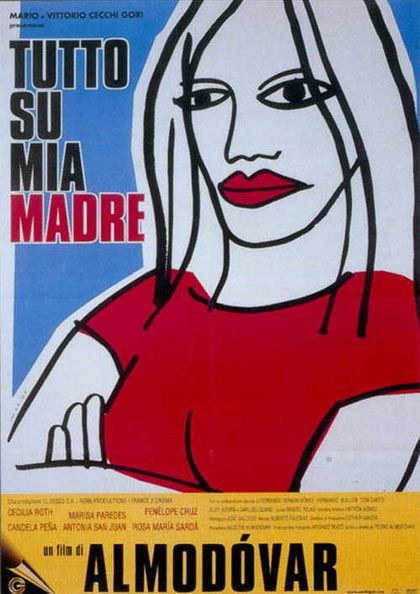
[Pubblicato nell’originale inglese da Disinformation con il titolo: Western Culture, 2000 AD, e ispirato da una visita che feci con mia moglie a Santiago de Compostela nel 2000. Rileggendo, vi trovo un parallelo (dalle conseguenze, però, opposte) fra il film Tutto su mia madre di Almodóvar e Salò, o le 120 giornate di Sodoma, di Pasolini. Non sono orgoglioso di rivelare, ma temo che io debba farlo, che nel film di Pasolini il gerarca che obbligava quei malcapitati alla coprofagia era mio zio, Uberto Paolo Quintavalle.]
I profeti sono l’incarnazione di un dilemma. Il loro messaggio è, in essenza, esoterico, tuttavia sono spinti a renderlo essoterico. Come tutti i dilemmi, neanche questo può essere risolto, e il risultato di solito è l’immolazione o la caduta del profeta, a meno che circostanze eccezionali non sospendano temporaneamente questa situazione. Inoltre, che ci debba essere l’iniziato (il profeta) e il non iniziato (i discepoli) è diventato un concetto piuttosto indigesto.
Infatti i valori tradizionali, quali il rapporto docente – discente, il tirocinio, la pazienza, la metodicità e la costanza sono andati perduti sia nella sfera sacra che in quella profana. Ad esempio, nelle arti figurative, pensate per un momento a Jackson Pollock, che ha basato tutto il suo lavoro di una vita nel tentativo di riprodurre con la pittura le tracce disegnate da suo padre, perduto da tempo, che urinava sulla roccia. Tali pitture, alle quali ero solito fare riferimento, forse in modo lusinghiero, come “spaghetti poco appetibili”, sono in mostra in molti dei principali musei del mondo. Chiaramente, non è il milieu in cui Cimabue avrebbe detto al suo allievo Giotto: “Hai superato il maestro”.
E tuttavia, un forum “profetico” come questo, che esorta a ripensare le proprie convinzioni di base, sente il dovere di promuovere e divulgare idee esoteriche. Ma qual è lo stato della cultura popolare occidentale nel 2000?
Il film di Pedro Almodovar, Tutto su mia madre, fu insignito del (marcia trionfale): premio per la regia al Festival di Cannes; miglior film dell’anno all’International Cinematographic Press Federation (Fipresci) al festival di San Sebastiano (Spagna); miglior film europeo e miglior regista europeo agli European Film Awards del 1999; miglior film dell’anno per Time Magazine; Golden Globe per il miglior film straniero; sette Goya Awards; Academy Award per miglior film straniero, e la lista continua.
Manuela, l’eroina della storia, lasciando una rappresentazione di Un tram chiamato desiderio col figlio diciassettenne, Esteban, si ritrova a guardare orripilata mentre questi, che stava rincorrendo la star della commedia per avere un autografo, viene ucciso da una macchina. Lui l’aveva pregata di parlargli del padre che non aveva mai conosciuto, e aveva tenuto un diario, chiamato Tutto su mia madre (l'eco del film Eva contro Eva è voluto). Dopo la morte di Esteban, Manuela va a Barcellona per cercare il padre del ragazzo, che ora si fa chiamare Lola. Transessuali, una suora incinta che lavora in un rifugio per prostitute maltrattate, l’amante saffica e tossicodipendente della star di Un Tram – tutti hanno un ruolo nella vita di Manuela. Alla fine, ci viene chiesto di credere che il padre transessuale del povero Esteban abbia messo incinta la giovane suora, sebbene ci si chieda che attrazione possa esercitare una suora su un omosessuale attempato. Come da copione, quest’ultima è affetta da AIDS. Alla fine, la suora muore di parto e Manuela diventa madre di un altro figlio di… Lola.
Ernest Lehman, lo sceneggiatore preferito di Alfred Hitchcok, mio maestro a Los Angeles, mi ha insegnato una regola d’oro nello scrivere storie: “Non dire mai al lettore qualcosa che già sa.” Tuttavia, Almodovar prima ci mostra la morte sfortunata di Esteban, poi fa in modo che Manuela racconti questa tragedia non una ma due volte ad altri personaggi che non ne sapevano niente. Il pubblico sbadiglia? Sì e no. L’intenzione è spremere le lacrime del pubblico, attirare simpatie non tanto per il figlio e per la madre, ma per tutti i personaggi coinvolti. Almodovar stesso ha affermato: “Non c’è spettacolo più grande del vedere una donna che piange.”
Di conseguenza, siamo indotti a commiserare un circo di personaggi dolorosamente grotteschi e non plausibili. Questa è la cultura della glorificazione del degrado e della mancanza di uno scopo. Il film sembrerebbe suggerire, forse involontariamente, che il grado di libertà goduta dai personaggi è un fardello di tale portata che semplicemente non sanno sopportarlo.
Quarantatré anni fa, Salò, o le 120 giornate di Sodoma, di Pier Paolo Pasolini, dipinse personaggi ancor più degradati. Qualcuno ricorderà la famosa scena in cui ad alcuni personaggi vengono fatte mangiare feci umane. Anche qui l’intento era, presumibilmente, scioccare i borghesi, visto che il film fu sequestrato, censurato etc. Al giorno d’oggi, l’intellighenzia applaude, e ricopre di premi film che, non solo ritraggono l’uomo nel suo disorientamento più totale, ma reclamano la nostra simpatia e il nostro plauso.
Questo è il vicolo cieco dell’esistenzialismo esasperato, un pozzo senza fondo. Al suo meglio, l’uomo esistenzialista, giusto e integro, è un triste sacerdote senza Dio, come esemplificato dal Dottor Rieux ne La Peste di Camus. Al suo peggio, è un individuo antropocentrico e arrogante che non pretende niente da se stesso e indulge in qualsiasi debolezza o degrado, o per il brivido della cosa, o perché, non conoscendo nulla di meglio, non sa come aiutare se stesso.
Non ci aveva avvertiti, Ortega y Gasset? “La sovranità dell’individuo non qualificato, dell’essere umano generico come tale, non è più un’idea giuridica, ma uno stato psicologico inerente all’uomo medio.” Bene, sono felici l’uomo e la donna medi? A giudicare dal film di Almodovar, per niente.
E c’è dell’altro.
Un film enormemente popolare rivela un altro aspetto della cultura occidentale, se possibile ancora più allarmante. Titanic racconta la storia inventata di un amore contrastato a bordo della nave fatale nel suo viaggio inaugurale. L’eroina è fidanzata per ragioni di convenienza a un uomo ricco ma volgare. Tuttavia s’innamora pazzamente di un passeggero clandestino, un giovane e spiantato pittore. Mentre la nave affonda, il ricco egoisticamente salva se stesso, a spese di una donna e di un bambino, mentre il povero sacrifica la sua vita per salvare quella dell’eroina. Milioni di donne giovani e non-così giovani hanno pianto tutte le loro lacrime mentre guardavano queste scene. Di che cosa si tratta? Di un chiaro messaggio antimaterialistico? Sì, ma soprattutto di una rielaborazione dell’antico mito di Tristano. La cultura occidentale del 2000 è, in generale, non più cristiana ma neppure laica. È, sebbene inconsapevolmente, Manichea.
Il Manicheismo si basa sulla divisione dualistica dell’universo negli opposti del bene e del male: il regno della Luce (spirito), guidato da Dio, e il regno dell’Oscurità (la materia), guidato da Satana. I due si sono mescolati e ingaggiano una lotta perenne. La razza umana è il risultato e il microcosmo di questa lotta. Il corpo umano è materiale, perciò è il male; l’anima umana è spirituale, un frammento della Luce divina, e deve essere redenta dalla sua prigionia, sia nel corpo sia nel mondo. In questo mondo della materia, l’amore puro (spirituale) non può esistere. Perciò si può avere solo nell’aldilà. Da qui, Tristano e Isotta, Romeo e Giulietta, etc.
Il pubblico occidentale contemporaneo piange guardando Titanic, in una inconscia presa di coscienza delle proprie manchevolezze e dei propri fallimenti. Attingendo alla propria esperienza, si rende conto che l’amore puro non si può ottenere in questo mondo, e si identifica con gli amanti sfortunati. Nonostante la libertà di scelta del coniuge, nonostante la possibilità di rimediare agli errori divorziando e risposandosi ancora e ancora, l’uomo e la donna occidentali bramano un amore di una tale purezza che, si rendono conto a dispetto di se stessi, non si può ottenere in questo mondo materialistico, ma solo nell’aldilà. Tuttavia, poiché la maggior parte di loro non crede nella vita dopo la morte, ciò diventa la moderna degenerazione del manicheismo, con una forte sfumatura nichilistica.
La decadenza è un concetto comparato. Forze possenti insistono nel mostrarci un quadro roseo. Il “Progresso”, questo termine di straordinaria vaghezza, ha arruolato molti potenti alleati nei secoli. L’intera problematica iniziò a Firenze, circa sei secoli fa.
Ad alcuni gioiellieri del Ponte Vecchio fu chiesto di custodire gioielli nei loro forzieri per amici e clienti. Notando che la quantità di gioielli recuperati dai proprietari era solo una frazione del totale depositato, si resero conto che potevano temporaneamente prestare un po’ di questo oro ai cittadini che ne avevano bisogno, ottenendo una cambiale per l’importo e gli interessi. Questo fu l’inizio del moderno sistema bancario. Questo segnò la fine di ciò che io chiamo l’Età dello Spirito, ma il mondo moderno chiama i Secoli Bui.
Tuttavia, la propaganda progressista ci insegna che il Rinascimento fu proprio questo: una rinascita. Intellettualizzando l’uomo, e ritirando la sua anima, Cartesio si ribellò contro i magnifici edifici che Pico della Mirandola, Marsilio Ficino e, in misura minore, il cronicamente confuso Giordano Bruno avevano costruito. (Della Mirandola tentò di fondere la Cristianità col Neo-Platonismo e la Cabala; Ficino “si limitò” alla Cristianità e al Neo-Platonismo; Bruno cercò di rifarsi alla magia Egiziana, (però apocrifa, come è emerso).
Più tardi, L’Illuminismo consolidò ulteriormente l’uomo sul trono dove si era auto installato, insieme a qualsiasi cosa ritenuta utile nella fisica di Newton. (Va sottolineato che Newton era molto coinvolto con l’alchimia, ma questa non sarebbe stata un’alleata del progresso). Poi giunsero gli –ismi, e il progresso trionfò completamente.
Meccanicismo, darwinismo, positivismo, determinismo, modernismo, e i loro inevitabili derivati: esistenzialismo, ateismo, nichilismo.
In altre parole, sei secoli fa l’uomo ha cominciato a cercare Dio nel proprio ombelico. Non trovandolo, ha continuato a esplorare, sebbene nei luoghi sbagliati. Alla fine, ha dimenticato persino cosa stava cercando in origine, e tutto ciò che ha potuto mostrare della sua ricerca è… il niente. Da ciò ha dichiarato che, non avendo trovato niente, non c’era niente da trovare, e Dio, o la deità, erano invenzioni delle culture primitive. La parola “superstizione” divenne di moda; la ragione, un feticcio.
L’uomo antropocentrico, non subordinato, lasciato ai suoi meccanismi, mi ricorda una cellula anaplastica, la cellula cancerosa che invade e distrugge il tessuto o il sistema circostante.
La perdita della subordinazione a un’autorità spirituale è andata di pari passo con la perdita di subordinazione a una autorità temporale
Il problema del Potere è il problema della Sovranità, e il problema della Sovranità è il problema della Legittimità. Il Potere è effettivo, valido e giusto, non abusivo se basato su una Sovranità legittima. Come tale, è naturalmente, spontaneamente e persino intimamente, riconosciuto da tutti coloro che sono legati ad esso. Tuttavia, qualche paragrafo sopra ho scritto, parafrasando Ortega y Gasset: “La sovranità dell’individuo non qualificato, dell’essere umano generico come tale, non è più un’idea giuridica, ma uno stato psicologico inerente l’uomo medio”. E l’uomo medio è colui la cui vita manca di qualsiasi scopo; colui che non chiede nulla a se stesso; colui che non trascende, ma piuttosto scivola lungo il facile declivio o, semplicemente, vivacchia galleggiando.
Le civiltà “tradizionali”, a differenza di quelle “moderne”, erano basate su una diversa visione del mondo. La realtà era sacra e spirituale, in opposizione a ciò che è materiale e materialistico. Di conseguenza, il Potere, l’Autorità e la Sovranità non erano basati sul numero di voti (e, nota bene, l’affluenza alle elezioni statunitensi è bassa; gli elettori votano per candidati che solo grazie a immensi fondi e sostegno economico possono permettersi le campagne elettorali), ma su un’origine superiore e metafisica. Per una società che viveva al tempo del mito, l’origine divina del Potere non era assurda, come qualsiasi persona moderna con la testa a posto (o dovrei piuttosto dire convenzionale?) penserebbe, bensì naturale. Non era un concetto astratto ma realistico. La persona che lo incarnava, il Re o la Regina, il Monarca, aveva una doppia funzione. Non solo governava i suoi sudditi, ma era anche un tramite con l’Autorità che, dall’alto, legittimava il suo potere. Lui o lei erano, in altre parole, un pontifex, un artefice di ponti.
Il papa cattolico è ancora considerato un pontefice, un pontifex, ma dall’inizio della chiesa Cattolica questo concetto fu male applicato. Quando nell’800 nacque il Sacro Romano Impero, il suo primo Imperatore non fu un papa ma Carlo Magno. Questa frattura fra il potere Spirituale e quello Temporale ha causato guerre, bagni di sangue e calamità di origine umana.
Sua Altezza Reale, la regina Elisabetta II, è “per grazia di Dio Difensore della fede”, sebbene non sia il capo della Comunità anglicana, poiché quest’ultima non ha autorità centrale e nessuno da cui possa aspettarsi un’autorità finale. Piuttosto, consiste di chiese nazionali autonome, che sono unite da legami di lealtà tra la sede di Canterbury e le altre. Ciò è dovuto a ragioni storiche, naturalmente. Ma, come Difensore della fede, la regina Elisabetta II è quanto di più vicino all’incarnazione di una forma di autorità tradizionale e metafisica. Come ci si aspetterebbe, molte, moltissime forze hanno lavorato nel ventesimo secolo per minare la sua autorità. Questo è un gran peccato, poiché lei rappresenta un autentico miracolo della Tradizione in un mondo altrimenti degenerato.
I progressisti strombazzino pure, adesso, i loro slogan e frasi fatte. Ma si ricordino di ciò che ha scritto Ortega y Gassett: “Contrariamente a ciò che si pensa di solito, è la persona di eccellenza, e non la persona comune, che vive in una servitù essenziale. La vita non ha sapore per lui/lei a meno che lui/lei non la facciano consistere nel servizio a qualcosa di trascendentale (…) Questa è la vita vissuta come una disciplina – la nobile vita. La nobiltà è definita dalle richieste che ci impone – dagli obblighi, non dai diritti. Noblesse oblige.”
Eppure, in questa epoca compiaciuta di sé in cui l’uomo comune presume di governare se stesso, siamo venuti a conoscenza di un nuovo insieme di afflizioni. Mai prima le masse sono state affette dal degrado del benessere. Insonnia, obesità e la fase 2: anoressia e bulimia; depressione maniacale e cronica, tossicodipendenza, alcolismo, morti autoerotiche e così via. Gente non subordinata, antropocentrica, inquieta, nel mondo dei ricchi si rende conto che ha la nausea di sé, e di ciò di cui si è circondata lavorando così duramente per ottenerlo. Il suddetto degrado sembra loro l’unica opzione. Sembra che queste persone abbiano bisogno di drogarsi per controbilanciare l’impatto di tutti i loro meccanismi salva fatica. E quelle libere da tali afflizioni possono essere facilmente dei robot compiacenti, dei tubi di cibo.
Una delle maggiori vittime di questo clima di autodistruzione e di nichilismo è la preghiera. L’Occidente non prega più. D’altra parte, i musulmani pregano almeno cinque volte al giorno. Un’ipotesi semiseria mi è venuta in mente più e più volte. Non potrebbe essere che, in risposta alle loro ferventi preghiere, alle nazioni arabe siano stati garantiti immensi giacimenti di petrolio, come fossero manna, mentre l’Occidente che non prega ha prodotto le sue varie rivoluzioni industriali, che hanno reso così importante questo idrocarburo liquido? Sarebbe un sottile esempio di preghiera retroattiva. La risposta alle loro suppliche era già sotto i piedi dei fedeli. Ma c’è voluto l’Occidente per attivare questa risposta concessa da tempo.
Ciò significa forse che la preghiera è consigliabile? Assolutamente sì, e non solo per ragioni egoistiche, ovviamente. Pregare, inginocchiarsi di fronte alla deità, sanziona la propria subordinazione all’autorità trascendente. Il fine della vita è al di fuori della vita, al di là di essa. La trascendenza ci fa desiderare Dio e questa meta allo stesso tempo. Possono benissimo essere la stessa cosa. Come la regina Elisabetta è a-scesa al trono, così noi possiamo tra-scendere i nostri ego isolati e i nostri miopi desideri. Questa è la vita del pellegrino o, come la chiamano i Sufi, la Tariga. La trascendenza implica la subordinazione a un principio superiore, e tuttavia l’elevazione, e la santificazione della propria vita.
Ma l’intellighenzia santifica, con premi e promozioni di ogni tipo, la glorificazione del degrado. C’è un significato intrinseco antitrascendente nella parola stessa. Degradare, dal latino de- gradus, gradino. Trascendere, d’altra parte, deriva da trans- scandere, arrampicare.
Quando l’uomo fu creato, non poteva fare ameno di essere geloso degli uccelli. Volando lungo linee invisibili, essi si libravano in alto fin dove poteva vedere e migravano verso terre lontane che poteva solo immaginare. Siccome non sapeva volare, iniziò a sognare. Col tempo, cominciò a costruire templi. Ma una spinta più forte era in lui.
Divenne un pellegrino.
La sua necessità di integrare il corso cosmico gli fece contemplare, considerare il corso tremolante delle stelle. Lo dice la parola stessa: contemplare, da con templum (uno spazio per osservare gli auguri); considerare, da con sidera, con le stelle.
Solare nella sua concezione del sacro, ma anche alla ricerca del principio lunare complementare, tutto ciò di cui aveva bisogno era allineare il suo sentiero con le invisibili forze telluriche lungo le quali tabernacoli di tutti i tipi sono stati eretti lungo i secoli.
Che possiamo tutti iniziare un pellegrinaggio, raggiungere la nostra destinazione, e oltrepassarla.
Western Culture, 2000 a.d.
Prophets are the incarnation of a dilemma. Their message is quintessentially esoteric, yet they are driven to make it exoteric. As all dilemmas, this cannot be solved, and the usual outcome is the immolation or downfall of the prophet, unless exceptional circumstances temporarily suspend this predicament. Moreover, that there should be the initiate (the prophet) and the uninitiate (the disciples), has become a rather indigestible concept.
Indeed, traditional values such as the teacher-disciple relationship, training, patience, methodicalness, and constancy, have been lost in the sacred and profane spheres alike. For example, in the figurative arts, think for a moment of Jackson Pollock, who based his life’s work on trying to reproduce in paint the patterns made by his long-lost father urinating on stone. Such paintings, to which I used to refer, perhaps flatteringly, as “unappetising spaghetti”, are on display in many major museums the world over. Clearly, this is not the environment for Cimabue to say to his pupil Giotto, “You have surpassed your teacher.”
And yet, a “prophetic” forum such as this, one that rethinks one’s basic assumptions, feels the duty to promote and divulge esoteric ideas into the public domain. But, what is the state of popular western culture in the year 2000?
Pedro Almodóvar’s latest film, All About My Mother, is on a victory march. He has been awarded as the Best Director at the Cannes Film Festival; Best Movie of the Year of the International Cinematographic Press Federation (Fipresci) at the Festival of San Sebastian (Spain); Best European Film and Best European Director at the 1999 European Film Awards; Time Magazine’s Best Movie of the Year; the Golden Globe for the Best foreign Film; seven Goya Awards; the Academy Award for Best Foreign Film, and the list goes on.
Manuela, the story’s heroine, leaving a performance of A Streetcar Named Desire with her 17-year-old son, Esteban, watches in horror as he is killed by a car while chasing the play’s star for an autograph. He had been begging his mother to tell him about the father he never knew, and keeping a journal entitled All About My Mother (the echo of All About Eve is deliberate). After Esteban’s death, Manuela goes to Barcelona to find the boy’s father, who now goes by the name of Lola. Transsexuals, a pregnant nun who works in a shelter for battered prostitutes, the Streetcar star’s junkie lesbian lover—all have a role in Manuela’s life. Eventually, we are asked to believe that the transexual father of the late Esteban has impreganted the young nun, though one wonders at the attraction a nun would have for an ageing transexual? Dutifully, the latter is afflicted by AIDS. In the end, the nun dies at childbirth, and Manuela mothers yet another son by… Lola.
Ernest Lehman, Alfred Hitchock’s favourite screenwriter, and my teacher in Los Angeles, taught me a golden rule in story-telling: “Never tell the audience something it already knows.” Yet, Almodóvar first shows us the unfortunate death of Esteban; then has Manuela recount this tragedy not once, but twice to other unknowing characters. Is the audience yawning? Yes and no. The intent is to jerk the audience’s tears, to engender sympathy not so much for the son and mother, but for all characters involved. Almodóvar himself has stated: “There is no greater spectacle than watching a woman cry.”
Consequently, we are made to commiserate a circus of painfully grotesque and implausible characters. This is the culture of the glorification of degradation, and of aimlessness. The film would seem to suggest, perhaps unwittingly, that the degree of freedom enjoyed by the characters is a burden of such magnitude, they simply cannot deal with it.
Twenty-five years ago, Pier Paolo Pasolini’s Salò, Or 120 Days Of Sodomportrayed yet more degraded individuals. Some might remember the notorious scene in which a few characters are made to eat human faeces. The intent was also, presumably, to shock the bourgeois, as the film was censored, sequestered, etc. Nowadays, the intelligentsia applauds, and lavishes awards to films that not only portray man at his most disoriented worst, but demand our sympathy, and praise.
This is the blind alley of exasperated existentialism, a bottomless pit. At his best, existentialist man, just and upright, is a sad priest without God, as exemplified by Dr. Rieux in Camus’s The Plague; at his worst, an anthropocentric, arrogant individual who demands nothing of himself, and indulges in whatever weakness or degradation, either for the thrill of it, or because, not knowing any better, he cannot help himself.
The sovereignty of the unqualified individual, of the generic human being as such, is no longer a juridical idea, but a psychological state inherent in the average man. Well, are average man and woman happy? Judging from Almodóvar’s film, not in the least.
And there is more.
A hugely popular recent film reveals another aspect of western culture, possibly more alarming. Titanic tells the fictitious story of a star-crossed love aboard the doomed ship on her maiden voyage. The heroine is betrothed to a rich but callous man for reasons of convenience. However she falls in love, head over heels, with a clandestine passenger, a boyish and penniless painter. As the ship sinks, the rich man selfishly saves himself at the expense of a woman or child, whereas the poor man sacrifices his life so as to save the heroine’s. Millions and millions of young and not-so-young women have wept all the tears they had as they watched this. What do we have here? A clear anti-materialistic message? Yes, but most of all we have a reshuffling of the age-old Tristan myth. Western culture in year 2000 is, by and large, no longer Christian, yet not secular either. It is, however unknowingly, Manichaean.
Manichaeism is hinged on a dualistic division of the universe into contending realms of good and evil: the realm of Light (spirit), ruled by God, and the realm of Darkness (matter), ruled by Satan. The two have become mixed and engaged in a perpetual struggle. The human race is a result and a microcosm of this struggle. The human body is material, therefore evil; the human soul is spiritual, a fragment of the divine Light, and must be redeemed from its imprisonment, both in the body and the world. In this world of matter, pure (spiritual) love cannot exist. Therefore, it can only be had in the afterworld. Hence, Tristan and Iseult, Romeo and Juliet, etc.
Contemporary western audiences weep at Titanic in unconscious recognition of their shortcomings and failures. Drawing from their own experiences, they recognise that pure love cannot be had in this world, and identify with the star-crossed lovers. Despite their freedom in selecting their spouse; despite the possibility of amending mistaken choices by divorcing and remarrying over and over, western man and woman long for a love of a purity that, they realise in spite of themselves, cannot be had in this materialistic world, but only in the afterworld. Since most of them do not quite believe in life after death, however, this becomes a modern degeneration of Manichaeism, with a strong nihilistic tinge.
Decadence is a comparative concept. Tremendous forces insist in showing us a rosy picture. “Progress”, this term of more than ordinary vagueness, has conscripted many powerful allies down the centuries. Indeed, the whole problem began in Florence, about six centuries ago.
Some jewellers on the Ponte Vecchio were asked to hold gold in their safes by friends and clients. Noticing that the amount of gold removed by owners was only a fraction of the total stored, they realised that they could temporarily lend out some of this gold to citizens in need, obtaining a promissory note for principal and interest. This was the very beginning of the modern banking system. Indeed, the first modern currency was the Florin, employed throughout Europe. Thus usury was legalised by governments, and became banking. This sealed the end of what I call The Age of the Spirit, but modern world calls The Dark Ages.
Yet, progressive propaganda teaches us that the Renaissance was just that: a rebirth. By intellectualising man, and withdrawing his soul, Descartes rebelled against the magnificent edifices that Pico della Mirandola, Marsilio Ficino, and to a lesser extent the chronically confused Giordano Bruno, had built. (Della Mirandola attempted to fuse Christianity with Neo-Platonism and the Cabala; Ficino “limited” himself to Christianity and Neo-Platonsim; Bruno attempted to revert to Egyptian magic [apocryphal, as it transpired].)
Later on, Enlightenment further consolidated man in his self-appointed throne, along with whatever was deemed useful in Newton’s physics. (It must be emphasised that Newton was much involved with alchemy, but this would not have been an ally to progress). Then came the -isms, and progress triumphed utterly.
Mechanism, Darwinism, Positivism, Determinism, Modernism, and their inevitable offspring: Existentialism, Atheism, Nihilism.
In other words, six centuries ago man began to seek God in his own navel. Not finding Him, he continued to explore, albeit in the wrong place. In the end, he forgot even what he was originally seeking, and all he could show for his quest was… nothingness. From this, he declared that, having found nothing, there was nothing to find, and God, or the Godhead, were inventions of primitive cultures. The word “superstition” became fashionable; reason, a fetish.
Anthropocentric, un-subordinated man left to his own devices reminds me of an anaplastic cell, the cancer cell that invades and destroys the surrounding tissue, or system.
Loss of subordination to a spiritual authority came hand in hand with loss in subordination to a temporal authority.
The problem of Power is the problem of Sovereignty, and the problem of Sovereignty is the problem of Legitimacy. Power is effective, valid and just, not abusive, if it is based on a legitimate Sovereignty. As such, it is naturally, spontaneously, even intimately recognised by all who are bound to it. Yet, a few paragraphs above, I wrote: “The sovereignty of the unqualified individual, of the generic human being as such, is no longer a juridical idea, but a psychological state inherent in the average man.” And the average man is he whose life lacks any purpose; he who makes no demands on himself; he who does not transcend, but rather slides down the easy slope, or simply goes drifting along.
“Traditional” civilisations, unlike “modern” ones, were based on a different vision of the world. Reality was sacred and spiritual, as opposed to material and materialistic. Consequently, Power, Authority and Sovereignty were not based on the number of votes (and, nota bene, the turnout at US election is about 10% of the voting population; these vote for candidates who only thanks to immense funds and backing could afford to run campaigns), but on a superior and metaphysical origin. In a society living in the time of myth, the divine origin of Power was not absurd, as any right-minded (or should I say conventional?) modern person would have it, but natural. It was not an abstract, but a concrete and indeed factual concept. The person who incarnated it, the King or Queen, the Monarch, had a twofold function. Not only did he govern his subjects, but was also a go-between with the Authority that, from above, legitimated his power. He or she was, in other words, a pontifex, a bridge-maker.
The Catholic pope is still considered a pontiff, a pontifex, but from the inception of the Christian Church this concept was misapplied. When the Holy Roman Empire was born in 800, its first Emperor was not a pope, but Charlemagne. This fracture between Spiritual and Temporal Power has caused wars, blood-baths and man-made calamities since.
HRH Queen Elizabeth II is “by the Grace of God, Defender of the Faith”, although not the Head of the Anglican Communion, as the latter has no central authority and no one person from whom it can expect final authority. Rather, it consists of national, autonomous churches that are bound together by ties of loyalty between the see of Canterbury and each other. This is due to historical reasons, of course. But, as Defender of the Faith, Queen Elizabeth II is the closest incarnation of a Traditional, and metaphysical, form of Authority. As is to be expected, many, many forces have been at work in the Twentieth Century so as to undermine Her Authority. This is a great pity, for She represents a veritable miracle of Tradition in an otherwise degenerated world.
Liberals and progressivists may now trumpet their slogans and stock phrases. But they must be reminded of what Ortega y Gassett wrote. “Contrary to what is usually thought, it is the person of excellence, and not the common person, who lives in essential servitude. Life has no savour for her/him unless (s)he makes it consist in service to something transcendental. (…) This is life lived as a discipline—the noble life. Nobility is defined by the demands it makes on us—by obligations, not by rights. Noblesse oblige.”
Yet, in this self-satisfied age in which ordinary man presumes to govern himself, we have become acquainted with a new set of afflictions. Never before have the masses been afflicted by the degradations of affluence. Insomnia; obesity, and its Phase 2: anorexia and bulimia; manic and chronic depression; drug addiction; alcoholism; autoerotic deaths, and so on. Un-subordinated, anthropocentric, listless people in the rich world realise that they are sick of themselves and of what they have worked so hard to surround themselves with. The mentioned degradtions seem to them the only options. One might say that they need dope to counteract the impact of all their labour-saving devices. And those free from these afflictions can easily be complacent robots, food tubes.
One of the many casualties of this climate of self-destruction and nihilism is prayer. The West no longer prays. On the other hand, Moslem nations pray five times a day, and then more. A semi-serious hypothesis has come to mind time and again. Could it be that, in response to their fervent prayers, the Arab nations were granted immense oil-fields, as if they were a manna, while the non-praying West produced its various industrial revolutions, which made this liquid hydrocarbon so all-important? It would be a subtle instance of retroactive praying. The response to their supplication was under the feet of the faithful, already. But it took the West to “activate” this long-granted response.
Does this mean that praying is advisable? By all means, and not merely for selfish reasons, obviously. Praying, kneeling before the Godhead, sanctions one’s subordination to a Transcendental Authority. The goal in one’s life is outside it, beyond it. Transcendence makes us yearn for God and this goal at once. They may well be one and the same. As Queen Elizabeth II a-scended to the throne, so can we tran-scend our insulated egos and short-sighted desires. This is the life of the pilgrim, or, as the Sufis call it, the Tariqa. Transcendence implies subordination to a higher principle, and yet the elevation, and sanctification, of one’s life.
But the intelligentsia sanctifies, with awards and promotion of all types, the glorification of degradation. There is an intrinsic anti-transcendental meaning in the very word. To degrade, from the Latin de- de- gradus- step. To transcend, on the other hand, derives from trans- trans- scandere to climb.
When man was created, he could not help being jealous of the birds. Flying along invisible lines, they soared as high as he could see, and migrated to distant lands he could only imagine. Since he could not fly, he started to dream. In time, he began to build temples. But a more compelling drive was inside him.
He became a pilgrim.
His necessity to integrate the cosmic course made him contemplate, consider the flickering course of the stars. The very words say it: contemplate, from con- templum (a space for observing auguries); consider, from con- sidera, with the stars.
Solar in his conception of the sacred, but also seeking the complementary lunar principle, all he needed was to align his path with the invisible tellurian forces along which shrines of all types have been erected down the ages.
May we all start on a pilgrimage, reach our destination, and go well beyond it.
Evoluzione alla rovescia

Di Guido Mina di Sospiro, tradotto da Patrizia Poli in collaborazione con l’autore. Originalmente pubblicato sotto il titolo Evolution Upside-Down su New English Review, Disinformation e New Dawn Magazine.
«Io non credo che l’uomo derivi dalla scimmia a causa dell’evoluzione, bensì che la scimmia derivi dall’uomo per involuzione».
Charles Darwin possedeva alcune caratteristiche che me lo rendono caro. Era un “dilettante”, non un professionista, manifestando chiaramente che una prepotente sete di conoscenza è una mania, non una professione, con le relative incombenze burocratiche. E c’è qualcosa di notevolmente ardito nel suo viaggio sulla Beagle. È vero, stava cercando conferma alle sue teorie pre-formulate; ed è anche vero che sembrava trascurare qualsiasi prova contraria. Ma la sindrome da parzialità sembra insita nella natura umana. L’oggettività è impossibile. Tuttavia, quando pubblicò i suoi fondamentali L’origine delle specie (1859) e L’origine dell’uomo, gli capitò di avere le idee giuste al momento giusto. Era l’età del Positivismo, orgoglioso e legittimo discendente dell’Illuminismo. Ed era l’alba del periodo più materialistico e deterministico della storia. La teoria di Darwin, dell’evoluzione biologica attraverso la selezione naturale, fu entusiasticamente cooptata da Herbert Spencer e da tutta l’intellighenzia, e applicata alla società in generale. Il dogma dell’evoluzione è ora insegnato in ogni scuola nel mondo occidentale e si trova in ogni testo scolastico, non solo di scienza, ma anche di storia, di educazione civica, etc. L’intero ethos della società occidentale è imbevuto di, e si fonda su, il mito materialistico dell’evoluzione e del progresso.
L’ampio concetto di “evoluzione”, perciò, è stato un prezioso alleato delle società moderne. Implicitamente, ma spesso anche esplicitamente, queste sostengono che, trovandosi all’apice dell’evoluzione sociale, la cosmologia che incarnano non possa che essere la migliore. È un argomento prepotentemente machiavellico. Eravamo scimmie, poi, esseri umani che potevano a malapena accendere un fuoco; infine, abbiamo padroneggiato la natura (eccome!); e ora, quali esponenti delle democrazie moderne nel mondo libero, laico e illuminato, abbiamo portato la buona novella ai nostri fratelli in paesi meno privilegiati, o piuttosto “in via di sviluppo”, e di sicuro lo abbiamo fatto in base alla legge dell’evoluzione. (Fra tantissime “anomalie”, Göbekli Tepe, il sito archeologico in Anatolia, confuta tale semplicistica spiegazione, ma ciò non sembra importare al sistema.) Certe idee si diffondono come la peste. Come conseguenza, un Pensiero Unico viene imposto nel mondo, così come un Unico Comportamento: lo stesso modo di ragionare, gli stessi “valori”, lo stesso modo di parlare, di vestire, persino di mangiare. Un punto di vista completamente e arbitrariamente personale è stato spacciato per oggettivo e viene imposto su scala planetaria attraverso le lobbies culturali e i mass media. Gloria all’intrinseca supremazia del dogma evoluzionista e alle sue ramificazioni: il liberalismo e il libero mercato, di cui l’ultimo è, in effetti, il risultato di una selezione naturale spietata.
Leibnitz, e più recentemente Popper, affermarono che viviamo “nel migliore dei mondi possibili”. È il principio della ragione sufficiente. Mentre Leibnitz sosteneva che Dio non può aver creato che il migliore dei mondi possibili, un mondo che cambia sempre in meglio, Popper affermò che le società occidentali contemporanee, e il loro sistema socio-economico, rappresentano il miglior sistema che possa essere ipotizzato in opposizione alle precedenti organizzazioni sociali e culturali.
Ora, caro lettore, se sei d’accordo con Leibnitz e Popper, non leggere oltre. Sei un esemplare umano ben adattato, il risultato di un indottrinamento culturale pervasivo, o di un vero e proprio lavaggio del cervello. Un vero figlio/figlia del tuo tempo. Se non sei d’accordo, vai avanti a tuo rischio e pericolo.
Quando ero ragazzo, un gruppo progressive rock italiano incise un album intitolato Darwin. La prima canzone incoraggiava (in modo sgrammaticato): “Prova, prova a pensare un po’ diverso, (...)”. Proseguiva spiegando che niente era stato creato da Dio ma, piuttosto, che tutta la creazione aveva creato se stessa, e poi era costantemente migliorata grazie alle leggi dell’evoluzione. Persino lo spaghetti rock cooptava la sua versione distorta del darwinismo. Bene, ora vi chiedo io di “pensare un po’ diverso” poiché, vedete:
io non credo che l’uomo derivi dalla scimmia per evoluzione, bensì che la scimmia derivi dall’uomo per involuzione.
Joseph de Maistre spiegava che i selvaggi non sono popoli primitivi nel senso di popoli originali, ma piuttosto le rimanenze degenerate e/o degeneranti di popoli antichi che sono scomparsi. Mi ribello al dogma rivoluzionario, e dico che le specie animali mostrano chiaramente la degenerazione del potenziale dell’uomo primitivo. In nuce, “il filosofo proibito” Julios Evola scrisse: “Questi potenziali insoddisfatti o devianti si manifestano come sottoprodotti del vero processo evoluzionistico che l’uomo ha condotto dall’inizio. Per questo motivo, l’ontogenesi, la storia biologica dell’individuo, non ripercorre in nessun modo il processo della filogenesi, la presunta storia evoluzionistica della specie, ma ripassa attraverso alcune possibilità eliminate. Si ferma a delinearle in modo approssimativo e poi va oltre, subordinando queste possibilità al principio superiore e specificamente umano, che è definito un poco alla volta nello sviluppo dell’individuo.”
Abbastanza contro corrente? Ha perfettamente senso, anche se non lineare. Ma lo scienziato necessiterebbe di prove. (La scienza istituzionale, per inciso, tende a giocare un gioco truccato, stabilendo le proprie regole, e implicitamente rifiutando tutto ciò che non si conforma ad esse.) Immaginate, per esempio, un centauro, un corpo di cavallo a quattro zampe sormontato da un torso a due braccia con una testa. Questa adorabile creatura, se scoperta da qualche parte, metterebbe in ginocchio la teoria evoluzionista, dato che non ci sono antenati da cui i centauri possano essere discesi; d’altro canto, il mondo esoterico può ben considerare noi, umani a due gambe, i bastardi degenerati e mutilati di un centauro.
I poeti cercano la verità, non gli scienziati. Il poeta francese Maurice de Guérin, nel suo Centauro, fa incontrare la creatura con Pan, mentre vien giù dalla montagna verso la valle, per dissetarsi in un fiume. È notte, il fiume luccica, un nastro d’argento sotto la luna. Questo è il Pan arcaico, un essere che appartiene direttamente alla terra, niente affatto un dio, sebbene più tardi sarà elevato a tale rango. Ed è Pan che il Centauro di Guérin vede quella notte dall’altra parte del fiume, o… il primo uomo. Il centauro è sopraffatto dal disgusto. E dalla tristezza. In lui, il Centauro vede un individuo mutilato. Quell’essere dall’altra parte del fiume annuncia, inoltre, la sua stessa sconfitta e la fine dell’Età dell’oro. E non è un caso se il fiume sembra, nella notte, una striscia d’argento. È iniziata l’Età dell’argento
Il mondo deve essere stato a lutto quando l’uomo si staccò da questa parte del suo essere. L’Età dell’oro lascia il posto a quella dell’argento. Toccherà in sorte a Erodoto, nel V secolo a.c., la transizione dall’età dell’argento a quella del bronzo. Egli sta a cavallo delle due epoche e annuncia la storia. Il Rinascimento, e più tardi l’Illuminismo, introdurranno l’Età del ferro, nella quale viviamo.
Lo scienziato non può che rifiutare ciò. Deve farlo. Ovviamente, se il paleontologo o l’archeologo disseppellissero i resti di un centauro, sarebbe non solo un colpo fatale alla teoria dell’evoluzione, ma alla scienza al completo. Inoltre, sarebbe utile trovare veri anacronismi. Come, ad esempio, esseri umani fossilizzati dentro lo stomaco di, mettiamo, un allosauro; o un trilobite in strati cenozoici (“recenti”, circa 65 milioni di anni). Ma, ancora, la scienza, e le società occidentali in generale, tendono a rifiutare o, in realtà, nascondere, prove che possano danneggiare lo status quo. Questa censura è una tattica di sopravvivenza, tutt’altro che originale. Ma pare che tracce di nicotina siano state recentemente ritrovate dentro un antico sarcofago egiziano. Essendo il tabacco una pianta del Nuovo Mondo, una tale scoperta dovrebbe aver cambiato, se non altro, la nostra percezione della storia. In realtà, significherebbe molto di più. Non sorprendentemente, di questo si è detto o fatto molto poco. Perché, gli studi su Atlantide, cioè concepire la possibilità che ci sia stata una civilizzazione avanzata in epoca preistorica, sono profondamente sovversivi. Sconfessano Darwin, Marx e Freud, e infastidiscono profondamente gli “esperti” accademici. Mettono in discussione la cosmologia del Big Bang. Non ispirano fiducia nel progresso o l’ingegneria sociale. E, infine, aprono la porta “alla marea nera di fango”, come Freud chiamava l’occulto (in realtà l’esoterismo) nella sua famoso contesa con Jung.
Qualche anno fa, passai un certo numero di pomeriggi e sere a intervistare lo sciamano, o piuttosto, “il portapacchetto” (nel “pacchetto” è custodita la “medicina” [o lo scibile magico]), della tribù Miccosukee, negli Everglades nel sud della Florida. Dopo alcune sedute scoprii che l’uomo era in grado di leggere la mia domanda seguente mentre la formulavo nella mia mente, e rispondeva senza che gli avessi chiesto niente a voce. Come ci si aspetterebbe, io ero totalmente incapace di leggere la sua mente o quella di chiunque altro. Alla fine, dalle sue parole è emersa un’interpretazione della storia assai insolita.
Quando gli Spagnoli cacciarono l’ultimo Moro, ottenendo così la loro storica Riconquista dopo otto secoli di occupazione musulmana, in quello stesso anno, 1492, Colombo ufficialmente e apparentemente scoprì l’America (per sbaglio?). È difficile pensare a una coincidenza. Certamente, la metastoria non è insegnata in nessuna scuola, e molta gente non sa nemmeno della sua esistenza. Che ci siano poteri coinvolti nei cambiamenti epocali – che vanno molto al di là della meschinità e dell’avidità umana e dei sollevamenti sociali – sembrerebbe una verità evidente, e tuttavia rifiutata e considerata impensabile dagli araldi del dogma storico evoluzionistico. E cosa fece l’uomo bianco quando venne in America, mi chiese il portapacchetto?
Trovò l’Età dell’oro, mi rendo conto ora, in retrospettiva: non era il Nuovo Mondo, era il Vecchio Mondo, più vecchio della storia e del mito. Sì, l’America era ancora in uno stato di grazia. Cereali macroscopici crescevano solo qui: granturco, zea mays, con grani così grandi da non richiedere macinatura. Era il cibo dei giganti, dei titani. Cacao, theobroma cacao, il frutto degli dei, ciò che “theo-broma” significa in greco. L’origine di questo albero tropicale era l’Amazzonia, da dove migrò in America centrale, attorno al 1500 a.c.. I Maya e gli Aztechi attribuivano origine divina all’albero del cacao, portato loro dal dio Quetzacoatl. La bevanda sacra chiamata “chocolatl” era consumata in coppe d’oro. E la lista continua. Il tabacco, cioè Nicotiana tabacum. Una pianta erbacea, il tabacco fu usato per prime dalle popolazioni dell’America precolombiana. I nativi americani coltivavano la pianta e la fumavano nelle pipe a scopo medico e cerimoniale. La varietà rustica era usata dagli sciamani per entrare in stato di trance e indurre allucinazioni. Il pomodoro, Lycopersicon esculentum, era un altro dono dell’Età dell’oro. Un frutto che cresceva prontamente non da un albero e poteva essere coltivato ovunque, ammesso che ci fosse abbastanza calore. Il suo frutto commestibile, carnoso, abitualmente rosso, è diventato un alimento base delle cucine di tutto il mondo. Cosa sarebbe la cucina italiana senza di esso? Niente pizza? Niente pasta? E che dire dei seguenti altri doni degli dei? Vaniglia, patate, (che, ironicamente, resero possibile la rivoluzione industriale), immense mandrie di bisonti che brucavano e vagavano libere nelle pianure del nord? Che dire del tacchino, che è diventato un animale così simbolico negli Stati Uniti, ed è allevato e mangiato ovunque nel mondo? Nessun uccello di queste dimensioni cresceva in Europa e, ancora una volta a ragione, poiché l’Europa aveva abbandonato l’Età dell’oro, poi l’Età dell’argento e stava lasciando anche l’Età del bronzo.
Ho una stampa di Eanger Irvin Couse che ho comprato a Taos, nel Nuovo Messico. Dipinta circa cento anni fa, rappresenta una scena silvestre. Un nativo americano, con indosso solo un lembo di stoffa attorno ai fianchi, accovacciato sui ginocchi, si nasconde dietro un gruppo di alberi, osservando attentamente, non visto, alcuni tacchini in una radura a pochi passi da lui. Con la mano destra impugna ciò che, a prima vista, sembrerebbe una lancia. A ben guardare, ci si accorge che sta solo agguantandosi a un alberello senza rami, che può essere scambiato per una lancia, ma è, in effetti, solo uno snello giovane albero radicato nel terreno. Questa immagine, per inciso molto ben fatta, dice tantissimo. Il nativo americano, magro ma evidentemente non affamato, non ha intenzione di uccidere i tacchini, ma si gode la loro vista.
Tali popolazioni, primitive, originali, meritavano l’Età dell’oro in cui ancora vivevano. Non avevano bisogno di escatologie. Infatti nelle grotte sono stati trovati disegni che dipingono cacciatori primitivi che cacciano anche nell’al di là. L’al di là, in effetti, c’era; non c’era confine fra la vita qui e da qualche altra parte. L’Età dell’oro era l’Eden, e l’oro stesso, paradossalmente, non serviva.
L’uomo bianco portò con sé non solo una serie di malattie esotiche, ma anche le banche, la più grave di tutte le malattie.
La Chiesa cattolica aveva messo al bando per secoli qualsiasi tasso d’interesse, percepito come usura. Le banche e il prestito divennero una pratica accettata solo durante l’inizio del Rinascimento.
“A cosa”, chiese il mio amico portapacchetto Miccosukee, “a cosa servivano le banche in America agli uomini bianchi?” Di fatto, possedevano tutto: la terra, gli alberi, il pesce, gli uccelli, la selvaggina. Tutto ciò che vedevano. Eppure introdussero quel supremo artificio — la banca.
Sappiamo cosa è accaduto ai milioni di bisonti che pascolavano nelle praterie nelle mani dell’uomo bianco che cacciava per sport con fucili a ripetizione. Sappiamo cosa è accaduto ai nativi americani. E, tuttavia, continuiamo a considerare le nostre società come il logico risultato dell’evoluzione e del progresso.
Frederic Edwin Church, il pittore della Hudson River School, si fece un punto d’onore di registrare le ultime vestigia dell’Età dell’oro in America. Non risparmiò alcuno sforzo nel raggiungere i luoghi più remoti per ritrarre la Grandiosità dell’Età dell’oro. Molto più di Turner o di Caspar David Friederich, rispettivamente dall’Inghilterra e dalla Germania. Proprio perché girò tutte le Americhe, ebbe l’ultima occasione di cantare a gloria dell’età perduta.
Ma il dogma evoluzionista si è diramato e ha infettato anche il mondo dell’arte. È difficile da credere, poiché l’arte avrebbe dovuto essere l’unico campo immune da un tal veleno. Tuttavia, ci è stato detto che anche l’arte si evolve. A chi piacerebbe Giotto, oggi, che non conosceva la prospettiva? Chiaramente, Piero della Francesca e Paolo Uccello, che l’hanno introdotta, erano molto superiori. Ma impallidiscono davanti alla grandezza di Michelangelo e, più tardi, di Tiziano. Tuttavia, Caravaggio, con le sue ombre e i chiaroscuri, è molto più evoluto. Per non dire di Goya, lontano finalmente da quegli stantii soggetti religiosi, impegnato nei molto migliori temi della vita comune. Ma l’impressionismo ha cambiato le carte in tavola un’altra volta – un cambiamento per il meglio, ovviamente – e tutti gli altri -ismi hanno portato alla migliore espressione artistica di tutte: l’arte astratta, alias “il qualunque-ismo”. In realtà, come ulteriore sviluppo sulla scala dell’evoluzione che porta alla perfezione, la bruttezza è diventata bellezza e la bellezza bruttezza. Le maggiori città del mondo occidentale annoverano molti musei dedicati a questo pinnacolo dell’evoluzione artistica: l’arte brutta. Mentre il fenomeno dell’arte brutta era in corso, Theodor Adorno e altri filosofi marxisti si affannavano a cantarne le lodi.
Come ci possiamo difendere dalle aberrazioni causate dalla cooptazione globalizzata e dall’imposizione di un dogma evoluzionistico onnicomprensivo? Penso di avervi dato qualche cenno. La storia è ciclica e non, come ci viene detto eloquentemente e assiduamente, lineare. Al momento siamo nel punto più infimo. L’Età dell’oro, o Kali Yuga, come descritto nei testi tradizionali induisti. Ma la marea può tornare in futuro. Nel frattempo, stiamo già facendo ciò che è la cosa migliore—differenziarci dal pensiero comune.
P. S. : Mia moglie ed io abbiamo una nutrita collezione di pitture astratte alle quali siamo molto affezionati; l’incoerenza è un buon segno.
I do not believe that man is derived from the ape by evolution, but that the ape is derived by man by involution.”
Charles Darwin possessed some characteristics which greatly endear him to me. He was an “amateur,” not a professional, making it clear that an all-consuming thirst for knowledge is a mania, not a profession, with its clerical and bureaucratic overtones. And there is something immensely dashing about his voyage on the Beagle. True, he was looking for confirming instances of his pre-established theory; also true, he did seem to neglect whatever evidence he chanced upon that went against it. But the confirmation bias syndrome seems to be embedded in human nature. Objectivity is impossible. Anyway, when he published his seminal works Origin of Species (1859) and The Descent of Man (1871), he happened to have the right ideas at the right time. It was the age of Positivism, that proud and most legitimate descendant of the Enlightenment. And it was the dawn of the most materialistic and deterministic age in recorded history. Darwin’s theory of biological evolution through natural selection was enthusiastically co-opted by Herbert Spencer and the intelligentsia, and applied to society as a whole. The evolutionary dogma is now taught in every school in the western world, and found in every textbook, and not just of science, but also of history, civics, etc. The whole ethos of western societies is imbued with, and hinges on, the materialistic myth of evolution and progress.
The broad concept of “evolution,” therefore, has been an invaluable ally to modern societies. Implicitly, but often also explicitly, these maintain that, by finding themselves at the apex of the process of societal evolution, the cosmology they incarnate could not be but the best one. It is a Machiavellianly powerful argument. Why, we were apes; then, humans who could barely, say, light a fire; eventually, we mastered nature (and how!); and now, as exponents of modern democracies in the free, secular and enlightened world, we spread the good news to our fellow humans in less privileged countries, or rather “developing” countries and, surely, by the laws of evolution. Indeed, such ideas spread like the plague. As a consequence, a Single Thought is imposed upon the world, along with a Single Behavior. The same way of reasoning, the same “values,” the same way of speaking, dressing, even eating. A completely arbitrary subjective point of view has been disguised as objective and is being imposed on a global scale through cultural lobbies and the mass media. Glory to the intrinsic supremacy of the evolutionary dogma, and its ramifications: liberalism and the free market, the latter being, in effect, the result of merciless natural selection.
Leibnitz, and far more recently Popper, postulated that we live in “the best of possible worlds.” It is the principle of sufficient reason. While Leibnitz argued that God could not have created but the best of possible worlds, one that is constantly undergoing changes for the better, Popper affirmed that contemporary western societies, and their socioeconomic system, represent the very best system that could possibly be conceived as opposed to previous social and cultural organizations.
Now, dear reader, if you agree with Leibnitz and Popper, read no further. You are a well-adapted human specimen, the result of a pervasive cultural indoctrination, or outright brainwash. A true son/daughter of your times. If you don’t agree, read on—at your own risk.
When I was a teen-ager, an Italian progressive rock group released an album entitled Darwin. One of its songs encouraged the listener to “think a little differently.” It continued by explaining that nothing had been created by God, but rather all creation had created itself, and then had constantly improved thanks to the laws of evolution. Even spaghetti rock was co-opting its own warped version of Darwinism! Well, I now ask you to “think a little differently”. For you see—
I do not believe that man is derived from the ape by evolution, but that the ape is derived by man by involution.
Joseph de Maistre explained that savage peoples are not primitive peoples in the sense of original peoples, but rather the degenerated and/or degenerating remains of ancient peoples that have disappeared. I rebel against the evolutionary dogma, and assert that animal species clearly show the degeneration of primordial man’s potential. In a nutshell, the “forbidden philosopher” Julius Evola wrote: “These unfulfilled or deviant potentials manifest themselves as byproducts of the true evolutionary process that man has led since the beginning. For this reason, ontogenesis, the biological history of the individual, does not repeat in any way the process of phylogenesis, the presumed evolutionary history of the species, but passes again through some eliminated possibilities. It stops to roughly outline them and then moves beyond, subordinating these possibilities to the superior and specifically human principle, which is defined and fulfilled little by little in the development of the individual.”
Contrarian enough? It makes wonderful, if non-linear, sense. But the scientist would need proof. (Institutional science, incidentally, does tend to play a fixed game, as it sets up its own rules, and implicitly dismisses anything that does not quite conform with them.) Imagine, for example, a centaur, a four-legged horse body topped by a two-armed human torso with head. This lovely creature, if unearthed somewhere, would bring evolutionary theory to its knees, because there are simply no ancestors from which centaurs might have descended. On the other hand, the esoteric world may well consider us, two-legged humans, the degenerated and maimed mongrels of a centaur.
Poets seek truth, not scientists. The French poet Maurice de Guérin in his Centaur has the creature meet Pan, coming down from the mountains to the valley, there to drink from a river. It is nighttime. The river shimmers, a silver streak under the moon. This is the archaic Pan, a being immediately belonging to the Earth, not at all a god, though later he will be promoted to that rank. And it is Pan that De Guérin’s Centaur sees that night on the opposite side of the river, or… the first man. The Centaur is overwhelmed by disgust. And by sadness. In him, the centaur sees a maimed individual. That being on the other side of the river announces, furthermore, his own demise, and the end of the Golden Age. Not by chance does the river seem, in the night, a silver streak. The Silver Age has begun.
The world must have been in mourning when man detached himself from this part of his own being. The Golden Age gives way to the Silver Age. The lot will fall to Herodotus, in the fifth century BC, to transition from the Silver Age to the Bronze Age. He stands at the cusp of the two epochs, and ushers in history. The Renaissance, and later the Enlightenment, will usher in the Iron Age, in which we live at present.
The scientist cannot but reject this. He must. Of course, if paleontologists or archeologists did unearth the remnants of a centaur, it would not only be a fatal blow to evolutionary theory, but to science as a whole. Also, finding true anachronisms would be useful. Such as human beings fossilized inside the stomach of, say, an allosaur; or a trilobite in Cenezoic (“recent,” up to 65 million years old) strata. But again, science, and western societies by and large, tend to dismiss or indeed conceal evidence that may damage the status quo. This censorship is a survival tactics, not in any way shocking or original. But apparently traces of nicotine were recently found inside an ancient Egyptian sarcophagus. Tobacco being a plant of the New World, such a discovery should have changed if nothing else our perception of history. Indeed, it would mean so much more. Not surprisingly, very little has been said or made of this. Why, Atlantean studies, i.e., the entertaining of the possibility that there was an advanced civilization in prehistoric times, are deeply subversive. They make nonsense of Darwin, Marx, and Freud, and greatly annoy the professorial “experts.” They question the Big Bang cosmology. They inspire no belief in progress or social engineering. And ultimately open the door to the “black tide of mud,”, as Freud called the occult (really the esoteric) in his famous feud with Jung.
A few years ago, I spent quite a number of afternoons and evenings interviewing the shaman, or rather “bundle-carrier,” of the Miccosukee tribe, in the Everglades of South Florida. After a few sessions I realized that the man was able to read my next question as I formulated it in my mind, and would answer to it without my asking it orally. As would be expected, I was utterly unable to read his mind, or anybody’s. Eventually, a very odd take on history surfaced from his words.
When the Spaniards kicked out the last Moor, thus achieving their epochal Reconquista after eight centuries of Muslim occupation, that very year, 1492, Columbus officially and ostensibly discovered America (in error?). It is hardly a coincidence. Certainly, metahistory is not taught in any school, so people are at best perplexed by it. That there should be powers involved in epochal changes which go well beyond the pettiness of human greed and social upheavals would seem a self-evident truth, yet contrariwise denied out and out as utterly unthinkable by the heralds of the evolutionary historical dogma. And what did the white men do when they came to America, asked the bundle-carrier?
They found the Golden Age, I realize now, in retrospect. It was not the New World; it was the Old World, older than history, older than myth.
Yes, America was still in a state of grace. Macroscopic cereal only grew here: corn, Zea mays, bearing grains on very large ears which did not require any milling. It was the food of giants, of the Titans. Cacao, Theobroma cacao, the Fruit of Gods, which “theo-broma” means in Greek. The origin of this tropical understory tree were the Amazon Headwaters from where it moved to Central America. Cocoa cultivation began by Mayan tribes in Central America, around 1500 BC. Mayans and Aztecs attributed divine origin to the cocoa tree, brought to them by god Quetzacoatl. The sacred beverage called “chocolatl” was consumed from golden cups. And the list goes on. Tobacco, i.e., Nicotiana tabacum. An herbaceous plant, tobacco was first used by the peoples of the pre-Columbian Americas. Native Americans cultivated the plant and smoked it in pipes for medicinal and ceremonial purposes. The rustica variety was used by shamans to enter trance states and induce hallucinations. Tomato, Lycopersicon esculentum, was another gift of the Golden age. A fruit which grew readily not from a tree, and could be cultivated anywhere, provided there be enough warmth. Its edible, fleshy, usually red fruit has become a staple for cuisines the world over. What would Italian cooking be without it? No pizza? No pasta? And what of the following other godly gifts: vanilla; potatoes (which, ironically, made the Industrial Revolution possible); immense herds of bison grazing and roaming freely in the Northern Plains? What of the turkey, which has become such a symbolic animal in the US, and is raised and eaten all over the world? No fowl of this size grew in Europe and, again, with good reason, as Europe had left the Golden Age, then the Silver Age, and indeed was leaving even the Bronze Age.
I have a print by Eanger Irving Couse which I bought in Taos, New Mexico. Painted about a hundred years ago, it depicts a sylvan scene. A native American, wearing only a loin-cloth, and crouching on his knees, is hiding behind a clump of trees, keenly observing, unseen, some turkeys in a clearing, a few paces from him. With his right hand he is clutching what at first sight appears to be a spear. On closer inspection, one realizes he is merely holding on to a branchless sapling, which can be mistaken for a spear, but is in fact a slender young tree rooted in the ground. This image, incidentally very well executed, speaks volumes. The native American, slim but evidently not hungry, does not intend to kill the turkeys, but does enjoy observing them.
Such people, primitive, original people, deserved the Golden Age in which they still lived. They had no need for eschatology. Indeed, drawings have been found in caves depicting primitive hunters hunting also in their after-life. There really was no after-life, no demarcation between life here and life elsewhere. The Golden Age was the Garden of Earthly Delights, and gold itself, paradoxically, was not needed.
White man brought along not only a host of exotic diseases, but banking, the greatest disease of them all.
Indeed, the Catholic Church had been banning for centuries the charging of interest at any rate, as it perceived it as usury, with banking, and lending, becoming an accepted practice only during the early Renaissance.
“What,” asked my friend, the Miccosukee bundle-carrier, “what did the white men need banking for in America?” As a matter of fact, they owned everything: land, trees, rivers, fish, fowl, game. Everything they saw. Yet, they introduced that supreme artifice—banking.
We know what has happened since to the millions of bison that used to roam the prairies, at the hand of the white man, hunting for sport with lever action rifles. We know what has happened to the native Americans. Yet, we continue to disguise our societies as the logic result of evolution and progress.
Frederic Edwin Church, the painter from the Hudson River School, made it a point to record the last vestiges of the Golden Age in this continent. He spared no effort in reaching the remotest places so as to portray their Golden Grandeur. Far more than Turner or Caspar David Friedrich, respectively from England and Germany; precisely because he roamed the Americas, he had the last chance to sing her Golden glory.
But the evolutionary dogma has branched out and infected also the world of art. It is hard to believe, as art should have been the only field immune to such poison. Yet, we have been told that art, too, evolves. Who could like Giotto now, he who did not know perspective? Clearly, Pier della Francesca and Paolo Uccello, who introduced it, were far superior. But they pale in comparison to the grandeur of Michelangelo and, later, Tiziano. However, Caravaggio, with his shadows and chiaroscuro, is far more evolved. Not to mention Goya. Away at last from those stale religious subjects, into the far better common-life themes. But impressionism fuzzed this up too — a change for the better, of course — and all the other -isms led to the best artistic expression of them all: abstract art, a.k.a. “anything-goes-ism.” Indeed, as a further development along the evolutionary scale leading to perfection, ugliness became beautiful, and the beautiful, ugly. Major cities across the Western world number many a museum dedicated to this pinnacle of artistic evolution: ugly art. All along, Theodor W. Adorno and other Marxist philosophers were busy singing the praises of ugliness.
How can we defend ourselves from the aberrations caused by the globalized co-option and imposition of an all-encompassing evolutionary dogma? I think I have given you some hints. History is cyclical and not, as we are eloquently and assiduously told, linear. We are caught up in the very low ebb, at present. The Iron Age, or the Kali Yuga, as described in traditional Hindu texts. But the tide may come in the future. In the meantime, we are already doing what is best: differentiating ourselves from mainstream thinking.
P.S.: My wife and I have quite a collection of abstract painting of which we are very fond; inconsistency is a good sign.
Il grande Lebowski

Questo articolo è stato scritto da Guido Mina di Sospiro, pubblicato sul sito newyorkese Disinformation, e tradotto da Umberto Bieco.
Più che un film Il grande Lebowski è il tipo di miracolo che, più raramente che occasionalmente, scivola attraverso le crepe dell'ingranaggio hollywoodiano. Questo perché il film precedente dei fratelli Coen, Fargo, guadagnò 7 nomination agli Oscar, e ne vinse due, per la miglior sceneggiatura originale e per la miglior attrice protagonista, Frances McDormand, tra l'altro moglie di Joel Coen. Quindi, sostenuti da un accresciuto prestigio, i fratelli Coen si imbarcarono nel loro successivo progetto, Il grande Lebowski, in cui il ruolo principale del Drugo è sublimemente interpretato da Jeff Bridges. Il Drugo, tra l'altro, fu ispirato da un uomo reale, Jeff Dowd, un addetto alle relazioni stampa che aiutò i fratelli Coen a lanciare Blood Simple (Sangue facile, 1984), il loro primo film.
Nel Drugo troviamo l'archetipo dello slacker, lo scansafatiche, secondo la definizione del dizionario, un giovane istruito che è antimaterialista, senza scopo, apatico, e che normalmente lavora in impieghi senza futuro. Infatti, il Drugo non sembra lavorare affatto. Gioca a bowling, però, e con passione.
Dopo il clamore suscitato da Fargo i critici si aspettavano, fatemi indovinare, un'altra dose di violenza esplicita sullo schermo, con persone che si fanno male tra i loro in modi inventivi (una cippatrice, ricordate?). Questo, secondo la visione del mondo esoterica che i mainstream media ci fanno digerire, è la via per gli Oscar e la fama: basti pensare a Il padrino 1 e 2, o a praticamente qualsiasi cosa di Tarantino, o allo stesso Fargo. Invece i fratelli Coen ci offrirono qualcosa che, nel 1998, lasciò la maggior parte dei critici perplessi. Che diamine avevano appena guardato?
Per trovare un senso al film, alcuni di loro tirarono in ballo Raymond Chandler, uno dei fondatori della scuola hard-boil della narrativa investigativa. In particolare, trovarono riferimenti a Il grande sonno, il primo romanzo di Chandler (1939), che fu adattato per lo schermo nel 1946 nell'eponimo film noir diretto da Howard Hawks. Ci sono senz'altro similarità. Più di tutte, entrambe le storie hanno un intreccio labirintico. Joel Coen ha detto “è una trama disperatamente complessa e in definitiva priva di importanza”. Ed ecco perché a molti critici è sfuggito il punto. Si sono persi nelle tortuosità della trama, che è più o meno risolta alla fine, se a qualcuno interessa seguirla.
Ma la trama era, di fatto, una parodia del genere. E non potrebbe essere altrimenti, in quanto il Drugo non è Philip Marlowe. Di nuovo, ci sono somiglianze superficiali: sono entrambi spiritosi e bevitori, ma questo è quanto. Il Drugo è uno stoner, un cannato, qualcuno che semplicemente non potrebbe appartenere all'universo di Marlowe. E soprattutto, il Drugo realizza una dimensione esoterica che è completamente mancante nel lavoro e nei personaggi di Chandler.
Citando Chandler: “Quando riguardo le mie storie sarebbe assurdo se non desiderassi che fossero state migliori. Ma se fossero state molto meglio non sarebbero state pubblicate. Se la formula fosse stata appena meno rigida, sarebbe sopravvissuta più scrittura di quel periodo. Alcuni di noi hanno provato piuttosto intensamente ad evadere dalla formula, ma usualmente venivano presi e rispediti indietro. Eccedere i limiti di una formula senza distruggerla è il sogno di ogni scrittore da rivista che non sia uno scribacchino senza speranza”.
Dopo il successo di critica e di pubblico di Fargo, i fratelli Coen si trovarono nell'invidiabile posizione di fare quel che più piaceva loro. E produssero un film che si sottrae a tutti i generi sfidandoli ed è assolutamente apprezzabile su molti livelli. Ad ogni modo, si aspettavano una ricezione ben migliore. Da allora Il grande Lebowski è diventato un cult movie, ed è chiaramente entrato in sintonia fin dall'inizio con le persone stanche delle minestre riscaldate hollywoodiane, persone che hanno trovato il Drugo e le sue bizzarrie se non altro rinfrescanti.
Il Drugo sembra propenso solo a giocare a bowling. Sorseggia dei White Russian il più frequentemente possibile e sembra sempre esserci un po' di erba a portata di mano. Dà molto valore al suo tappeto, su cui qualcuno minge. Infatti, il pisciare sul suo tappeto che “dà davvero un tono alla stanza” può essere visto come l'origine di tutti i mali. Quando riesce a prendere un nuovo tappeto dal Lebowski milionario, il Drugo viene mostrato steso su di esso, intento ad ascoltare con il suo Walkman registrazioni ambientali di una sala da bowling, e sembra sereno come un serafino.
Più avanti nel film, dopo che Drugo ha aiutato la figlia del milionario - Maude – a concepire (recitata molto bene da Julianne Moore), sentiamo il Drugo dirle che in gioventù ha contribuito a redigere la Dichiarazione di Port Huron che fondò il comitato Studenti per una Società Democratica, ed era un componente dei Sette di Seattle. Citando uno dei passaggi della Dichiarazione: “L'umanità ha disperatamente bisogno di una leaderhisp visionaria e rivoluzionaria per rispondere ai suoi enormi e profondamente radicati problemi, ma l'America langue in uno stallo nazionale, i suoi obiettivi sono ambigui e dettati dalla tradizione quando dovrebbero essere freschi e di vasta portata, la sua democrazia apatica e manipolata quando dovrebbe essere dinamica e partecipativa.”
Il film si apre con il Presidente George H. W. Bush in TV che si riferisce all'invasione del Kuwait da parte dell'Iraq con un “questa aggressione non durerà!”. Sembra incredibilmente retorico e falso. Infatti, alcuni giorni dopo, il Drugo usa la stessa dichiarazione per chiedere al Lebowski milionario di pulirgli il tappeto. Dopotutto, hanno orinato su di esso per un caso di scambio d'identità, scambiando il Drugo per il milionario. A questa ragionevole richiesta il milionario risponde con uno sbarramento di insulti pieni d'odio ai quali il Drugo risponde: “fanculo”.
In questa semplice asserzione vi è molto della prospettiva mentale ed emozionale del Drugo. Sono andati i giorni giovanili in cui scriveva urgentemente di una “leadership visionaria e rivoluzionaria”. C'è qualcuno come George H. W. Bush al timone, andiamo! Per cui, cosa può fare un uomo? Questo, sospetto, è quello che il film chiede. Il Drugo, un pacifista dichiarato, subisce la tortura dell'acqua nel suo stesso bagno, viene preso a pugni in faccia, pesantemente insultato sia dal milionario che dal capo della polizia di Malibu, viene schernito da un altro poliziotto, gli viene mentito, è sedotto da Maude che, forse con lungimiranza, vuole il suo seme, e ovviamente i suoi geni, per il suo bambino, ma certamente non un padre/marito. Non è tutto. La sua casa viene violata in diverse occasioni, e i nichilisti tedeschi minacciano il Drugo gettando un furetto (“Bella marmotta” esclama quando la vede la prima volta) nella vasca in cui sta facendo il bagno.
Quando Jesus, il giocatore di bowling pedofilo, gli dice: “Vedo che vi siete fatti strada fino alle semifinali. Dios mio, amico. Liam e io vi fotteremo per bene”, il Drugo risponde “Sì, beh, questa è solo, sai, tipo, la tua opinione, amico”.
La sua macchina scassata passa attraverso incidenti e disavventure di tutti i tipi finché viene finalmente incendiata. Non intasca nessuno dei compensi promessi dal milionario. E in aggiunta a quanto elencato tollera, per tutto il film e presumibilmente per il resto della sua vita, il suo amico di bowling, Walter, un veterano del Vietnam con problemi di gestione della rabbia, per usare un eufemismo. È la definitiva ironia: il vecchio hippy che fa coppia con un reduce che, come modus operandi nella vita civile, conserva un atteggiamento altamente belligerante.
E nonostante ciò, niente sembra coinvolgere il Drugo. Sì, si arrabbia (al punto che Walter gli dice: “Dai, stai facendo molto poco il Drugo, sei molto non Drugo”), impreca costantemente, e ribatte a Walter e a molte altre persone irragionevoli che sembrano stargli intorno come zanzare, ma presto si mescerà un altro White Russian, o si farà una fumata, o si rilasserà in un bagno caldo. Occasionalmente ripiega sui gentili movimenti del Tai Chi per tenere lo stress a bada. Come un mistico, si concentra sul disegno più grande. Ancora meglio, come un vero mistico, non si concentra affatto.
Molto si è detto del Drughismo, una filosofia di vita ispirata dal Drugo. Ma non c'è niente di nuovo in questo, in quanto sembra appartenere al grande flusso di Philosophia Perennis che, giù per i millenni, ha prodotto concetti marcatamente similari anche se espressi in modi differenti e da differenti culture ed epoche. E infatti i proponenti del Drughismo citano Lao Tzu, Epicuro, Eraclito, il Budda, e il Gesù Cristo pre-ecclesiastico come esempi di antichi profeti Drughisti.
Quel che nel Drugo è sublime è che non predica affatto. Ci ha provato in gioventù, e ora ovviamente vede la cosa come una follia giovanile. In qualche modo sopravvive con molti pochi soldi e trova il materialismo una bestia strana. Il “cinese” che originariamente piscia sul suo tappeto; il milionario; i Nichilisti tedeschi; il produttore di film porno; i teppisti assortiti – sono tutti materialisti molto attaccati alla ricchezza e intenzionati ad utilizzare la violenza per salvaguardarla o accrescerla. A causa di un caso di omonimia, egli è improvvisamente circondato da questo tipo di gente come se fosse entrato in un manicomio. Ma almeno è chiaro a lui e allo spettatore percettivo che sono tutti lunatici.
Il livello di aggressività, e latente o esplicita violenza, che rileva attorno a sé stesso è scioccante.
Dopo che ha fatto l'amore con Maude, le dice: “È un caso complicato, Maude. Un sacco di input, un sacco di output. Fortunatamente, mi sono attenuto ad un rigoroso, uhm, regime di droga per mantenere la mia mente, sai, agile”. Ciò è rivelatore. Il mondo attorno a lui è talmente andato a p......e di recente, che si è sentito forzato ad attenersi ad un “piuttosto rigido regime di droghe”. Normalmente, si ha la sensazione che le sue lunghe serate spese a giocare a bowling e un atteggiamento generalmente rilassato dovrebbe togliere la maggior parte dello stress. Ma lo stress, di recente, è stato enorme. Eppure, egli mantiene miracolosamente la sua pace mentale.
C'è qualcosa di trascendentale in questo: il Drugo si solleva al di sopra di tutte le circostanze. È arrabbiato per l'intero film, che non è affatto la sua natura, e i fratelli Coen meritano ulteriori lodi per una simile intelligente idea: estrapolare il Drugo dal suo abituale milieu e gettarlo in un circo pieno di ostili lunatici che vogliono qualcosa da lui e lo insulteranno, minacceranno e picchieranno per ottenerlo.
Siamo a milioni di miglia di distanza dal claustrofobico mondo di Raymond Chandler. Per essere onesti, egli scrisse i proprio romanzi all'apice del modernismo, un periodo teo-eccentrico e molto poco giudizioso nella storia della cultura occidentale in cui il mondo fu ridotto solamente alla percezione sensoriale e ad obiettivi materialistici.
Lao Tzu è un saggio della Cina antica e una figura chiave del Taoismo. Se egli sia effettivamente vissuto o sia una figura leggendaria rimane da stabilire, ma è considerato l'autore del Tao Te Ching, un libro fondamentale sia nel Taoismo filosofico che nella religione cinese. In esso, si trova l'asserzione: “bandisci la saggezza, scarta la conoscenze, / e il popolo ne profitterà cento volte”. Escludendo Platone e tutte le scuole neoplatoniche, così è come “l'amore di Sofia”, o della saggezza, la filo-sofia nell'Occidente è degenerata nell' “amore del sofismo” - precisamente il tipo di “saggezza” e “conoscenza” che Lao Tzu ci invita a scartare. Infatti, il Nichilismo, così presente nel film attraverso le azioni dei Nichilisti tedeschi, probabilmente ridicolizza ciò a cui il mondo occidentale è malaccortamente arrivato dopo millenni di filosofia digressiva andata a male.
Il Drugo svetta sopra una tale incompleta e distorta Weltanschauung. E questo è quello che i critici mainstream inizialmente non sono riusciti a comprendere. Vedendo come il film raggiugeva il cult status e diventava, in effetti, popolare, sono ritornati ad esaminarlo, e hanno tardivamente scodellato recensioni favorevoli – dieci anni o più dopo la sua uscita originaria, alcuni di loro de facto ritrattando pubblicamente. Il fatto è che i critici mainstream hanno la pancia piena del canone Artistotelico/Euclideo/Cartesiano/Newtoniano/Darwiniano che ci hanno somministrato a scuola. Allora, se perseguono un'istruzione superiore, gli vengono servite ulteriori dosi dello stesso canone, di cui la storia del cinema è a sua volta pervasa. Cogliere le implicazioni de Il grande Lebowski era oltre le loro capacità, e infatti la maggior parte di loro non le ha colte. Ma fece vibrare le corde giuste di molti di noi, che vi sono ritornati ripetutamente, e l'hanno fatto conoscere agli amici. Fa un ottimo punteggio anche dal punto di vista della riguardabilità.
All'inizio si prova, invano, a concentrarsi sulla trama. Ma il film è anche molto divertente. Ci sono inoltre numerose gemme nei dialoghi: “[Walter] dì che quel che ti pare sulla dottrina del Nazionalsocialismo, Drugo, ma almeno ha un ethos” “[Walter] E inoltre, Drugo, “cinese” non è la, uh, terminologia preferibile... Asiatico-Americano. Per favore.” “[La moglie da esibire del milionario] A Dieter non importa nulla. È un nichilista” “[Drugo] Dev'essere estenuante”.
La fotografia e le sequenze oniriche sono clamorose, e la musica, un accompagmento perfetto, grazie anche a T-Bone Burnett, che è accreditato come archivista musicale. The Man In Me di Bob Dylan risuona ripetutamente ed è perfetta: “L'uomo in me compirebbe qualsiasi compito / e come ricompensa, chiederebbe poco / Ci vuole una donna come te / per arrivare all'uomo in me”. Naturalmente ciò potrebbe esser visto come un commento ironico sulla scelta di Maude. Ma infatti, nonostante le sue osservazioni denigratorie dopo aver fatto l'amore con il Drugo (“Vedi, Jeffrey, non voglio un partner. Infatti non voglio che il padre sia qualcuno che io debba vedere socialmente, o qualcuno che io voglia cresca il bambino stesso”) lei ha scelto il Drugo, tra tutti, nella moltitudine di potenziali donatori di seme. E ciò dev'essere perché egli è talmente disarmante che lei ha deciso, su due piedi, parlandogli nel proprio atelier, che lui era quello da cui voleva avere un bambino. Quindi qualcuno, in questo mondo materiale, comprende le potenzialità e le qualità del Drugo.
Infine, la recitazione è ispirata, soprattutto quella di Jeff Bridges e John Goodman, rispettivamente nei ruoli del Drugo e di Walter.
Il film finisce con la morte di Donny, il terzo componente della loro squadra di bowling, un uomo mite interpretato da Steve Buscemi (all'opposto del suo personaggio in Fargo) che è costantemente e sgarbatamente zittito da Walter. Ma nonostante Walter brandisca una pistola e persino un Uzi, e nonostante l'utilizzo da parte dei Nichilisti, stupefacentemente, di una sciabola, non c'è morte violenta nel film (evidentemente con disappunto dei critici mainstream): Donny muore di infarto. E il riversare delle sue ceneri da parte di Walter è ancora un'altra “pagliacciata”, come il Drugo la chiama, dato che le ceneri non finiscono nell'Oceano Pacifico, come voluto, ma, portate dal vento, principalmente in faccia del Drugo stesso.
Alla fine del film il narratore, un cowboy con un forte accento strascicato del sud interpretato da Sam Elliot, incontra di nuovo Drugo alla solita sala da bowling. L'intera avventura, o disavventura, sembra ora, è stato un caso di molto rumore per nulla, con due maggiori eccezioni: la morte di Donny, tragicamente, e la notizia che “c'è un piccolo Lebowski in arrivo”. Il Drugo non sa nemmeno questo, e probabilmente non gli sarà mai detto, e nemmeno lui indagherà: ormai conosciamo il personaggio abbastanza bene. Ma è di nuovo di buon umore, si prepara per le finali del torneo di bowling, sereno e sorridente. Quella è la natura del Drugo. Il narratore dice: “Prendila comoda, Drugo – so che lo farai”. E il Drugo replica: “Sì, amico. Bè, lo sai, il Drugo sopporta”.
E questo è quanto: il Drugo sopporta. Alla faccia dell'avversità e della virulenza dell'intero mondo il Drugo, tra tutta la gente, è equilibrato, tollerante e coerentemente non-violento. Non colpisce mai di ritorno; il concetto di vendetta non sembra abitare la sua mente. Come se non bastasse, egli sembra implicitamente essere indulgente con un sacco di gente ultra-aggressiva, là fuori, che si comporterà come una massa di ostili lunatici. “E' bello sapere che è là fuori, il Drugo, a prendersela comoda per tutti noi peccatori” - alla fine commenta il narratore dopo che il Drugo se n'è andato.
Ci sono molti pacifisti nel mondo – fino a che la loro pazienza viene severamente messa alla prova, o i loro diritti palesemente usurpati. Ci sono anche persone persuase che la pace è il naturale stato dell'umanità. È una bella idea che sfortunatamente non corrisponde alla realtà. Anche il Buddismo concede “il male minore” per evitare “un male maggiore”. La storia è una tragica litania di aggressioni arbitrarie e invasioni. La pace sembra essere l'eccezione, la guerra la regola.
L'antico drammaturgo romano Plauto sintetizza la natura umana con “homo homini lupus” - l'uomo è lupo per l'altro uomo. Troppi esseri su questo pianeta prosperano sulla morte di altri, dai microbi ai predatori. Presumere che l'umanità è una fratellanza di, diciamo, angeli, è malaccorto. Anche gli alberi si uccidono l'un l'altro in una sorta di guerra chimica chiamata allelopatia.
In gioventù, il Drugo ha provato a cambiare il mondo, con un manifesto, nientemeno, occupando Berkeley e così via. Alla fine ha capito che era senza speranza. Ma ciò non l'ha fatto diventare un rancoroso, arrabbiato o vendicativo. E nemmeno è un esempio, come vorrebbe il cliché. Lui non fa, lui è. Anche quando provocato, non fa male a nessuno. Gli importa poco del denaro ed è, essenzialmente, un sensibile, onesto uomo con il tipo di pazienza e tolleranza che appartiene agli spiritualmente dotati. Egli non predica; ora nella saggezza della sua maturità, non lo farebbe mai; egli semplicemente sopporta. Con più persone come lui, il mondo migliorerebbe marcatamente.
More than a movie The Big Lebowski is the kind of miracle that, more rarely than occasionally, slips through the cracks of the Hollywood machinery. That’s because the Coen Brothers’ previous film, Fargo, earned seven Academy Nominations and won two, for best original screenplay and best actress in a leading role, Frances McDormand, incidentally Joel Coen’s wife. So, with a lot more clout behind them, the Coen Brothers embarked on their next project, The Big Lebowski, in which the leading role of the Dude is sublimely played by Jeff Bridges. The Dude, by the way, was inspired by a real man, Jeff Dowd, a publicist who helped the Coen Brothers in launching Blood Simple, their first film.
In the Dude we find the archetype of the slacker, i.e, according to the definition in the dictionary, an educated young person who is antimaterialistic, purposeless, apathetic, and usually works in a dead-end job. In fact, the Dude doesn’t seem to work at all. He does bowl, though, and with a passion.
After the clamor over Fargo critics expected, let me guess, some more graphic violence on the screen, with people harming each other in inventive ways (a wood chipper, anyone?). That, according to the exoteric worldview we are made to digest by mainstream media, is the way to Oscars and fame: think of The Godfather I and II, or just about anything by Tarantino, or Fargo itself. Instead the Coen Brothers gave us an offering that, back in 1998, left the majority of the critics perplexed. What on earth had they just watched?
To make some sense out of the film, some of them brought Raymond Chandler into the picture, one of the founders of the hard-boiled school of detective fiction. In particular, they found references to The Big Sleep, Chandler’s first novel (1939), which was adapted for the screen in 1946 in the eponymous film noir directed by Howard Hawks. Indeed there are similarities. Most of all, each film is loaded with a labyrinthine storyline. Joel Coen said that “it’s a hopelessly complex plot that is ultimately unimportant.” And here is where many critics missed the point. They got lost in the convolutions of the plot, which is more or less resolved at the end if one really cares to follow it. But the plot was, in fact, a parody of the genre. And it couldn’t be otherwise, as the Dude is no Philip Marlowe. Again, there are some superficial resemblances: they’re both wisecracking and hard-drinking, but that’s about it. The Dude is a stoner, something that simply could never belong in Marlowe’s universe. And above all, the Dude brings forth an esoteric dimension that is completely lacking in Chandler’s work and characters.
Quoting Chandler: “As I look back on my stories it would be absurd if I did not wish they had been better. But if they had been much better they would not have been published. If the formula had been a little less rigid, more of the writing of that time might have survived. Some of us tried pretty hard to break out of the formula, but we usually got caught and sent back. To exceed the limits of a formula without destroying it is the dream of every magazine writer who is not a hopeless hack.”
After the critical and popular success of Fargo, the Coen Brothers found themselves in the enviable position of being able to do as they pleased. And they produced a film that defies all genres and is thoroughly enjoyable on many levels. They did, however, expect a much better reception. The Big Lebowski has since become a cult movie, and obviously it resonated from the very start with people who are tired of formulaic Hollywood concoctions and found the Dude and his antics if nothing else refreshing.
The Dude seems to be very keen only on bowling. He sips White Russians as often as he can and there always seems to be a little pot at reach. He makes much of his rug, which is “micturated upon.” In fact, the peeing on his rug “that tied the room together” could be seen as the source of all evils. When he manages to get a new rug from the millionaire Lebowski, the Dude is shown lying on it, listening in his Walkman’s headset to sounds recorded in a bowling alley, and looks as serene as a seraph.
Later on in the film, after the Dude has helped the millionaire’s daughter — Maude — to conceive (she is played very well by Julianne Moore), we hear the Dude tell her that in his younger years he contributed to drafting the Port Huron Statement that founded Students for a Democratic Society, and was a member of the Seattle Seven. Quoting one of the Statement’s passages: “Mankind desperately needs visionary and revolutionary leadership to respond to its enormous and deeply-entrenched problems, but America rests in national stalemate, her goals ambiguous and tradition-bound when they should be new and far-reaching, her democracy apathetic and manipulated when it should be dynamic and participative.”
The film opens with President George H. W. Bush on TV addressing Iraq’s invasion of Kuwait with, “This aggression will not stand!” It looks incredibly rhetorical and phony. In fact, a few days later, the Dude uses the same statement so as to plead with the millionaire Lebowski for him to have the rug cleaned up. After all, they peed on it because of a case of mistaken identity, taking the Dude for the millionaire. At this reasonable request the millionaire responds with a barrage of hateful insults, to which the Dude replies, “Fuck it.”
In this simple assertion lies much of the Dude’s mental and emotional outlook. Gone are the youthful days in which he would urgently write of “visionary and revolutionary leadership.” There’s somebody like George H. W. Bush at the helm, come on! So, what can a man do? That, I suspect, is what the film asks. The Dude, a self-confessed pacifist, is water-boarded in his own toilet, punched in the face, heavily insulted by both the millionaire and the head of the Malibu Police, mocked by another policeman, lied to, seduced by Maude who, perhaps long-sightedly, wants his semen, and obviously his genes, for her baby, but certainly not a father/husband.
That’s not all. His house in broken into various times, and the German nihilists threaten the Dude by throwing a ferret (“Nice marmot,” he exclaims when he first sees it) in the tub in which he’s taking a bath. When Jesus, the bowling pedophile, tells him: “I see you rolled your way into the semis. Dios mio, man. Liam and me, we’re gonna fuck you up.” The Dude replies, “Yeah well, that’s just, ya know, like, your opinion, man.”
His beat-up car goes through all sorts of accidents and misadventures until it’s finally set aflame. He pockets none of the rewards promised by the millionaire. And in addition to all of the above he puts up, for the whole film and presumably for the rest of his life, with his bowling buddy Walter, a Vietnam veteran with an anger-management problem, to put it mildly. It’s the ultimate irony: the former hippy paired up with the war veteran who, as a modus operandi in civilian life, retains a highly belligerent attitude.
And yet, nothing seems to phase the Dude. Yes, he gets angry (to the point that Walter tells him: “Come on. You’re being very unDude.”), swears constantly, and talks back to Walter and many other unreasonable people who seem to surround him like mosquitoes, but soon he will be stirring himself another White Russian, or will have a smoke, or relax in a warm bath. Occasionally he resorts to the gentle movements of Tai chi to keep stress at bay. Like a mystic, he focuses on the big picture. Better yet, like a true mystic, he doesn’t focus at all.
Much has been made of Dudeism, a philosophy of life inspired by the Dude. But there’s nothing new in this, as he seems to belong in the great stream of Philosophia Perennis which, down the millennia, has produced strikingly similar concepts even if expressed in different ways and from different cultures and ages. And in fact the proponents of Dudeism cite Lao Tzu, Epicurus, Heraclitus, the Buddha, and the pre-ecclesiastical Jesus Christ as examples of ancient Dudeist prophets.
What is sublime about the Dude is that he won’t preach at all. He tried that in his youth, and now obviously sees it as youthful folly. Somehow he gets by with very little money and finds materialism an inherently strange beast. The “Chinaman” who originally pees on his rug; the millionaire; the German Nihilists; the porno film producer; the sundry thugs — all are materialists very attached to wealth and willing to employ violence so as to safeguard it or increase it. Because of a case of homonymy, he is suddenly surrounded by such people as if he’d walked into an asylum. But at least it’s clear to him and to the perceptive viewer that they are the lunatics.
The level of aggressiveness and latent or explicit violence he registers around himself is appalling. After he’s made love to Maude, he tells her, “It’s a complicated case, Maude. Lotta ins, lotta outs. Fortunately I’ve been adhering to a pretty strict, uh, drug regimen to keep my mind, you know, limber.” That is telling. The world around him has gotten so f….d up lately, he’s found himself forced to adhere to a “pretty strict drug regimen.” Normally, one gets the feeling that his long evenings spent bowling and a general relaxed attitude would take much of the load off. But the load, lately, has been enormous. Yet, he miraculously maintains his peace of mind.
There is something transcendental about this: the Dude rises above all circumstances. He spends the whole movie angry, which is not his nature at all, and the Coen Brothers deserve further praise for such a clever idea: to extrapolate the Dude from his habitual milieu and toss him into a circus full of hostile lunatics who want something from him and will insult him, threaten him and beat him to get it.
We are a million miles away from the claustrophobic world of Raymond Chandler. In fairness, he wrote his novels at the height of modernism, a very injudicious and theo-eccentric period in the history of western culture in which the world was reduced solely to sensory perception and materialistic pursuits.
Lao Tzu is a sage of ancient China and a key figure in Taoism. Whether he actually lived or is a legendary figure remains to be established, but he’s considered to be the author of the Tao Te Ching, a fundamental book both in philosophical Taoism and Chinese religion. In it, one finds the assertion: “Banish wisdom, discard knowledge, / and the people shall profit a hundredfold.” Excluding Plato and all Neoplatonic schools, this is how from “love of Sophia,” or of wisdom, philo-sophy in the West has degenerated into “love of sophistry” — precisely the type of “wisdom” and “knowledge” that Lao Tzu urges us to discard. In fact, Nihilism, so very present in the film through the actions of the German Nihilists, is lampooned probably as what the western world has misguidedly arrived at after millennia of discursive philosophy gone awry.
The Dude towers above such a warped and incomplete Weltanschauung. And that is what mainstream critics initially failed to realize. As the movie has grown in cult status and become, in effect, popular, they’ve gone back to it, and belatedly dished out favorable reviews — ten or more years after its original release, some of them de facto recanting publicly. The fact is, mainstream critics are fed the Aristotelian / Euclidean / Cartesian / Newtonian / Darwinian canon we were all fed at school. Then, if they pursue higher education, they’re fed more doses of the same canon, of which the history of cinema is also imbued. To grasp the implications of The Big Lebowsky was beyond them, and in fact for the most part they did not. But it struck a chord with many of us, who have gone back to it time and again, and turned on friends to it. It scores very highly from a standpoint of rewatchability, too.
At first one tries, in vain, to focus on the plot. But the film is also very funny. Then there are many gems in the dialogue: “[Walter] Say what you like about the tenets of National Socialism, Dude, at least it’s an ethos.” “[Walter] And also, Dude, Chinaman is not the preferred, uh, nomenclature… Asian-American. Please.” “[Millionaire’s trophy wife] Dieter doesn’t care about anything. He’s a nihilist. “[Dude] That must be exhausting.”
The photography and dream sequences are stunning, and the music, a perfect accompaniment, also thanks to T-Bone Burnett, who is credited as musical archivist. Bob Dylan’s The Man in Me is heard repeatedly, and is ideal: “The man in me will do nearly any task / As for compensation, there’s a little he will ask / Take a woman like you / To get through to the man in me.” Of course this could be seen as an ironic comment on Maude’s choice. But in fact, despite her disparaging remarks after she’s made love to the Dude (“Look, Jeffrey, I don’t want a partner. In fact I don’t want the father to be someone I have to see socially, or who I’ll have any interest in rearing the child himself”) she has picked the Dude, of all people, out of the multitude of potential sperm donors. And that must be because he is so disarming that she’s decided at once, upon talking to him in her atelier, that he is the one who will give her a child. So somebody in this material world does realize the qualities and potentialities of the Dude.
Finally, the acting is inspired, especially from Jeff Bridges and John Goodman respectively as the Dude and Walter.
The film ends with the death of Donny, the third member on their bowling team, a meek man played by Steve Buscemi (as opposed to his character in Fargo) who is constantly and rudely silenced by Walter. But despite Walter’s brandishing of a handgun and even of an Uzi, and despite the Nihilists’ resorting to, astonishingly, a saber, there is no violent death in the movie (evidently to the chagrin of mainstream critics): Donny dies of a heart attack. And the disposing of his ashes by Walter is yet another “travesty,” as the Dude calls it since the ashes end up not in the Pacific Ocean, as intended, but, carried by the wind, mainly on the Dude himself.
At the very end of the film the narrator, a cowboy with a strong southern drawl played by Sam Elliot, meets the Dude again at the usual bowling alley. The whole adventure, or misadventure, it now seems, has been a case of much ado about nothing, with two major exceptions: Donny’s death, tragically, and the news that “there’s a little Lebowski on the way.” The Dude doesn’t even know this, and probably will never be told, nor will he ever inquire: by now, we know the character well enough. But he’s back in fine spirits, preparing for the bowling tournament finals, serene and smiling. That is the true nature of the Dude. The narrator says: “Take it easy, Dude — I know that you will.” And the Dude replies, “Yeah, man. Well, you know, the Dude abides.”
And that is that: the Dude abides. In the face of adversity and the virulence of the whole world the Dude, of all people, is level-headed, tolerant, and consistently non-violent. He never punches back; the concept of revenge doesn’t seem to inhabit his mind. What is more, he seems implicitly to make allowances for a lot of overaggressive people, out there, who will act like very hostile lunatics. “It’s good knowin’ he’s out there, the Dude, takin’ her easy for all us sinners,” finally comments the narrator after the Dude has left.
There are many pacifists in the world — until their patience is severely tested, or their rights blatantly usurped. There are also people persuaded that peace is the natural state for mankind. It’s a beautiful idea that unfortunately doesn’t correspond to reality. Even Buddhism allows for “the lesser evil” to avert “a greater evil.” History reads like a tragic litany of wanton aggression and invasion. Peace seems to be the exception, war the rule.
The ancient Roman playwright Plautus summarized human nature with “Homo homini lupus” — man wolf to the man. Too many beings on this planet thrive on the death of others, from microbes to predators. To presume that mankind is a brotherhood of, say, angels, is misguided. Even trees kill one another in a type of chemical warfare called allelopathy.
In his youth, the Dude tried to change the world, with a manifesto, no less, occupying Berkley, and so on. Eventually he realized that it was hopeless. But that didn’t make him become bitter, or angry, or revengeful. Nor does he lead by example, as the cliché would go. He doesn’t do, he is. Even when provoked, he harms no one. He cares little about money and is, in essence, a sensible, honest man with the kind of patience and tolerance that belongs to the spiritually gifted. He doesn’t preach; now in the wisdom of his maturity, he never would; he just abides. With more people like him, the world would improve markedly.
In risu Veritas: dieci dei più divertenti film americani, più tre stranieri altrettanto divertenti

Questo saggio è stato scritto da Guido Mina di Sospiro, originariamente pubblicato su Disinformation, alternative views website di New York City, e tradotto da Patrizia Poli
In Riflessioni sulla morte di Mishima, Henry Miller, dopo aver cantato le lodi, sia dell’autore giapponese che mise fine alla sua vita con un suicidio rituale tramite seppuku (taglio dell’addome), sia di ciò che è giapponese in generale, notò: “La sua completa serietà, mi sembra, gli ha remato contro.” In se stessa, l’osservazione suona come uno scherzo. Mishima, davvero tremendamente serio su tutto, avrebbe disapprovato con veemenza. Anche nella nostra società industriale si è alzato il ciglio contro l’umorismo per secoli, in realtà millenni.
Platone censurò il divertimento della commedia nel Philebus come una forma di disprezzo. “In generale”, scrisse, “il ridicolo è un tipo di male, specificatamente un vizio”. Nella Retorica, Aristotele affermò che l’arguzia è educata insolenza, mentre ne L’etica nicomachea ammonì: “La maggior parte della gente ama il divertimento e lo scherzo più di quanto dovrebbe… uno scherzo è una sorta di presa in giro, e i legislatori proibiscono alcuni tipi di prese in giro – forse avrebbero dovuto proibire alcuni tipi di scherzi.”
Va da sé che anche i primi pensatori cristiani siano stati contrari all’umorismo e alla risata, una tendenza, questa, che continuò attraverso tutto il Medioevo. Più avanti, i Puritani, tipicamente, incoraggiarono i fedeli a vivere vite sobrie e serie, mentre Hobbes e Cartesio diedero voce alle loro restrizioni. Nel 1900 il filosofo Henry Bergson pubblicò “Il riso”, una raccolta di tre saggi che per la prima volta si occupò dell’ilarità causata dal comico. Ma lo sforzo di Bergson rimase l’eccezione: fino ad oggi la tragedia è presa sul serio mentre si ride della commedia, sia letteralmente che figurativamente. Quando si parla di film, rimane inconcepibile per l’Accademia Cinematografica scegliere una commedia come miglior film o miglior sceneggiatura originale. E, tuttavia, far ridere la gente è infinitamente più difficile che farla piangere.
Tra gli altri, un orientale molto perspicace, Gautama Buddha, secoli fa notò che “la vita è sofferenza”, e mise in cima alle sue nobili verità questa intuizione di portata mondiale. Infatti, le religioni più seguite sulla terra, che annoverano bilioni di persone – quella di Abramo, l’Induismo e il Buddismo – hanno tutte prodotto le loro prescrizioni per un diligente evitamento di vita. Si può argomentare che attraverso di esse la religiosità della vita sia stata soppiantata dalla religiosità del distacco dalla vita. Con queste premesse sempre più il riso può essere visto come un disordine cosmico. Sì, riconosce colui che ride, c’è sofferenza, e perdita, e tristezza, e io rido ciò nonostante. È il nostro umano e, insieme, non umano, modo di dire: Sai cosa? Sono pienamente cosciente del memento mori, infatti ci vivo insieme tutti i giorni, e rido lo stesso!
Qui di seguito dieci film americani, così come tre stranieri, che a mio avviso esprimono il meglio di ciò che l’umanità può raggiungere quando si tratta di sconvolgere il cosmo e con esso la logica. La tragedia ci circonda; la commedia non tanto. Perciò, troviamo la commedia e ridiamo. Ho fatto uno sforzo consapevole per fare un elenco di film che sono divertenti dall’inizio alla fine, e non solo in parte, e che si possono rivedere più di una volta.
Due notevoli film parzialmente divertenti che non fanno parte di questa lista sono Bringing up Baby, il classico del 1938, perché perde mordente dopo i primi due terzi e degenera in una farsa non divertente, e The Birdcage (1996), il remake del film franco italiano del 1978 La Cage aux Folles, che fa ridere solo in una scena particolarmente protratta, la cena col senatore in visita e sua moglie. Almeno un film con Laurel e Hardy farebbe parte di questa lista, ad esempio Swiss Miss (1938), meno l’inizio da operetta, scegliendo la versione italiana. Infatti, molti film di Laurel e Hardy furono doppiati in italiano da Alberto Sordi, lui stesso un comico di genio, che usò per entrambi gli attori un tono diverso e un forte accento inglese, che contribuì non poco alle loro comiche. Nell’originale, le loro voci non aggiungevano nulla alla comicità.
In ordine cronologico:
Duck soup, La guerra lampo dei fratelli Marx (1933). Straordinariamente divertente e perfetto sotto molti punti di vista. L’aggettivo “zani”, così spesso utilizzato in riferimento ai fratelli Marx, deriva da Zani, la forma veneziana per Gianni, Giovanni, usata nella commedia dell’arte come nome comune per vari servitori che si comportano da pagliacci. E, davvero, ciascuno dei divertenti fratelli (Zeppo fu considerato all’inizio come l’uomo giusto ma alla fine eliminato) poteva essere una maschera della commedia dell’arte; Groucho con i suoi giochi di parole e la sua veloce parlantina, il pseudo italiano Chico, o Chiccolini, con il suo surreale buon senso e accento esagerato, e, migliore di tutti, il muto, malandrino, sabotante e sempre arrapato Harpo. Se i personaggi che circondano i tre fratelli appaiono legnosi e innaturali è perché lo sono: il film è, inter multa alia, una rappresentazione del milieu diplomatico che, nonostante la sua aria civilizzata e le buone maniere, non ha impedito all’Europa e al mondo di immergersi nella prima guerra mondiale, appena diciotto anni prima, e non ha fatto niente, diciassette anni dopo, per impedire al mondo di cadere nella seconda guerra mondiale. Sulla pomposità che circonda questo mondo, i fratelli Marx hanno sempre prosperato, stabilendosi rapidamente come incarnazioni di pura irriverenza su schermo. La povera Margaret Dumont, incessantemente bersaglio degli scherzi di Groucho, fa la parte di Gloria Teasdale, un vedova facoltosa che si accolla il bilancio della Repubblica di Freedonia. È matronale e pomposa, e Groucho la demolisce ogni volta che apre bocca.
L’anarchia presente nei migliori film dei fratelli Marx era il nocciolo della commedia dell’arte, in cui molti attori parlavano, o, piuttosto, gridavano, simultaneamente, e il canovaccio era un mezzo d’improvvisazione. Duck Soup è un tesoro di anarchia, zaninità, irriverenza, satira, comicità – e rimane un capolavoro da quando è stato realizzato tanti anni fa.
Ovviamente ci sono molti film divertenti negli anni successivi, non solo dei fratelli Marx. Ma, come ho detto, sto facendo una lista di film completamente divertenti, non solo in parte. Per la prossima voce, devo fare un salto in avanti di più di quaranta anni.
Young Frankenstein, Frankenstei junior (1974). Entriamo qui, grazie al genio di Mel Brooks e Gene Wilder, nel regno del postmodernismo, avanti di un buon decennio. Come parodia del classico film horror, il film fu girato in bianco e nero e con le stesse tecniche narrative e di editing degli anni trenta. Vi pare un po’ troppo intellettuale? Niente affatto. Il film è divertentissimo e, per la verità, alcune frasi sono diventate famose. Marty Feldman è divertente in modo eccentrico nel ruolo di Igor, e lo stesso dicasi per Teri Garr (ve la ricordate nello show di David Letterman? Mostrò spesso in quel contesto la sua vena comica e in questo film mostra un grande talento). Gene Wilder recita come se fosse posseduto, e l’intera opera è da sbellicarsi dal ridere, insieme parodia e omaggio dell’era cinematografica pre moderna
National lampoon’s vacation (1983) (Vacation) Il patriarca Clark Griswold, un Chevy Chase al suo meglio, decide di trascorrere più tempo con la moglie e i due figli, e s’imbarca con una grossa station wagon in un viaggio on the road attraverso gli Stati Uniti, da Chicago al parco di Divertimenti Walley World di Los Angeles. Il viaggio dovrebbe stabilire legami ed essere basato sulla qualità del tempo trascorso insieme, ma si trasforma nella saga della sfiga. Tra le altre cose i Griswold uccidono accidentalmente un cane, legano la zia morta sul tetto della macchina, tanto per intenderci, mentre il patriarca è spesso tentato da una voluttuosa bionda che guida una Ferrari. Qua e là sono accennati alcuni dei conflitti sperimentati dai giovani genitori, e il tutto colpisce ancora di più per la leggerezza con cui il tema è trattato. Ad esempio, il fastidioso sospetto che il padre possa essere più interessato a cacciare belle ragazze piuttosto che a passare del tempo di qualità con i figli; che la vita familiare sia, in effetti, soffocante; che sua moglie sia bella, sì, ma l’uomo sia anche poligamo per natura… Alla fine, Walley Wolrld diventa, più che una destinazione, una fissazione. Al termine i Griswold raggiungeranno la meta, anche se persino questo si trasformerà in un anti-climax. Durante il viaggio, lo spettatore non farà che ridere.
This is Spinal Tap (1984) è il documentario parodia di Rob Reiner, scritto insieme a Christopher Guest, Michael Mc Kean e Harry Shearer che vi recitò anche, rispettivamente, come Nigel Tufnel, David St. Hubbins e Derek Smalls. Spinal Tap, una band britannica che è stata attiva per diciassette anni con molti alti e bassi, arriva negli Stati Uniti per un tour che deve promuovere l’ultimo album, Smell the Glove. Rob Reiner fa la parte di Marty Di Bergi, un regista che sta girando un documentario su questo particolare tour, che passerà dal male al peggio fino alla catastrofe. Sebbene tutto sia inventato, l’effetto generale è estremamente realistico. In verità il film è un compendio di molti tropi classici del rock’n’roll: la fidanzata impicciona che minaccia l’unità della band, il promotore odioso, il manager indaffarato e viscido, le due righe di recensione dell’album, la rissa nello studio, la pietra di Stonehenge (e similari) come meccanismo di palcoscenico, i cambiamenti di nome della band, il batterista scomparso, la perdita di direzione musicale che vira verso il jazz, la presenza nello show “Dove sono finiti?” in radio o televisione, senza menzionare il leggendario amplificatore che arriva a 11.
Quando ho recensito il film per la prima volta, circa trenta anni fa, trovai una analogia con Don Chisciotte. I membri della Spinal Tap sono presentati come cretini assoluti, ed è normale ridere di loro dall’inizio alla fine, come se fossero i Tre Marmittoni armati di strumenti musicali. Ma i loro peccati sono così veniali che è difficile rimproverar loro qualcosa. Infatti ridiamo di loro e, tuttavia, siamo dalla loro parte, e ci sentiamo sollevati dall’improbabile lieto fine del film. Secoli prima, Cervantes ottenne lo stesso risultato con Don Chisciotte: ridiamo dello stupido e dei suoi errori ma, allo stesso tempo, siamo in ansia per lui. Cervantes scrisse una parodia del mondo cavalleresco – riuscì trionfalmente nell’intento – e, tuttavia, lo immortalò. Rob Reiner e i suoi co-sceneggiatori vollero filmare una parodia del rock’n’roll – anche loro vi riuscirono – e tuttavia lo resero immortale.
Lost in America (1985) (Pubblicitario offresi) Due yuppi, David (Albert Brooks ) e Linda (Julie Hagerty, di Airplane!) lasciano il loro posto di lavoro (in realtà David viene licenziato mentre sta aspettando una promozione e covando il sogno del suo feticcio, una BMW nuova fiammante con interni in pelle). Dopo aver venduto tutto quello che possiedono, si mettono in viaggio in una casa viaggiante, dopo che Easy Rider è diventato il loro nuovo feticcio, o, almeno, quello di lui. Decidono di fare tutto ciò che hanno sognato in gioventù, come, “dobbiamo andare dagli Indiani!”. Presto la loro nuova vita prende, però, una brutta piega. A Las Vegas, all’insaputa del marito, Linda si gioca tutto il loro gruzzolo. David è sconvolto, ma se ne esce con un piano. S’incontra col direttore del Casinò, che si muove e parla come lo stereotipo del mafioso, e gli illustra “il più coraggioso esperimento pubblicitario, ovvero: ci ridai indietro i soldi.” È una di tante scene brillanti. Ne nascono molte complicazioni comiche. Albert Brooks non è mai stato così ispirato, sia come regista che come attore. Il film è un resoconto perfetto, non solo degli anni ottanta, ma anche del genere umano. Ed è divertente dall’inizio alla fine.
The Big Lebowski (1998) Non è un segreto che questo sia in assoluto il mio film preferito, non solo una semplice commedia. Sul seguente sito ho pubblicato due saggi su di esso
http://disinfo.com/2014/04/esoteric-take-big-lebowski/
l’ultima parte è stata successivamente pubblicata nel libro: http://dudeism.com/lebowski-101/
Fiumi d’inchiostro sono stati versati su questo film, e a ragione. Da una prospettiva strettamente comica si può candidare come uno dei più divertenti di sempre. L’interazione fra il Drugo e il suo frenetico amico Walter è una delle migliori mai realizzate sullo schermo. Abbondano le situazioni assurde, e questo è senz’altro il capolavoro dei fratelli Cohen. Il fatto che il loro film precedente, Fargo, sia stato ricoperto di premi in tutto il mondo e che Il grande Lebowski sia stato considerato manchevole da molti critici quando uscì, rinforza quello che dicevo all’inizio: Fargo abbonda in omicidi e sangue, perciò merita l’attenzione della critica in quanto tragedia, specialmente in un paese pervaso dalla cultura delle armi. L’infinitamente più sofisticato Grande Lebowski è liquidabile come roba leggera e da ridere. A dire il vero, alcuni di tali critici hanno cambiato la loro opinione da allora; a prescindere da cosa pensano, il film è diventato un cult, a cui è dedicato anche un festival annuale, il Lebowski Fest. Questo è un film veramente imperdibile. L’ho visto e rivisto molte volte, anche in un angolo remoto dell’Islanda, con i sottotitoli in islandese: i locali non sapevano niente del film, ma ben presto hanno cominciato a ridere senza mai smettere.
Napoleon dynamite (2004) Jon Herder impersona Seth, “superstraordinario nerd”, nel trattato di Jared e Jerusha Hess sulla goffaggine, alienazione e disfunzionalità adolescenziale. Sebbene a basso costo e indipendente, il film evita l’atmosfera trita piena di angoscia di molti film indipendenti e ci consegna un ritratto di surreale anormalità nel reame del normale. Un sedicenne che va alla scuola superiore odiando ogni minuto della propria vita in un ambiente molto surreale. A volte l’Idaho ci appare come la luna, e il contesto domestico in cui si Seth muove è ugualmente bizzarro – la nonna che guida il quad, il memorabile zio Rico, l’inquietante fratello che si collega on line con LaFawnduh, che viene a trovarlo da Detroit. Il riso nasce da Seth e dalle situazioni bizzarre in cui egli si trova. Un piccolo capolavoro comico. Ah, non sorprende che il critico Rogert Ebert abbia dato al film una stella e mezzo.
Nacho Libre (2006). Il film successivo a Napoleon Dynamite, di Jared e Jerusha Hess, è un altro gioiello. Il film è ispirato a Frate Tormenta, un prete messicano che, per più di due decenni, combatté come wrestler per mantenere un orfanotrofio. Vi recita Jeff Black in quello che ritengo il suo miglior momento, nel ruolo di un frate che cucina per i suoi compagni e per gli orfani. La sua recitazione è così pomposa, così sopra le righe, che ricorda Oliver Hardy al massimo dell’istrionismo. La sua spalla Esqueleto (che significa “scheletro” ed è recitata dall’effettivamente scheletrico Héctor Jiménez) a volte gli ruba la scena con frasi assurde come, “Non so perché mi devi sempre giudicare perché credo solo nella scienza”. Il film è un pastiche riuscitissimo di lotta libera, kitsch voluto, catechismo, frammenti di spagnolo e d’inglese con forte accento spagnolo, e ha l’aspetto di un film italiano o spagnolo di serie B degli anni sessanta. Alcuni critici lo hanno ritenuto offensivo per come tratta il cattolicesimo, i messicani, gli ultimi e persino gli orfani, quando Esqueleto afferma: “Sono stufo di sentir parlare dei tuoi stupidi orfani; io odio gli orfani!” Ma la commedia trascende tali restrizioni, o, in effetti, prospera su di esse, come ampiamente dimostrato dalla prossima voce.
Borat: cultural Learnings of america for Make Benefit Glorious Nation of Kazakhstan (2006) Borat - Studio culturale sull'America a beneficio della gloriosa nazione del Kazakistan. Col personaggio di Ali G, Sacha Baron Cohen aveva fornito più di un indicazione del suo talento comico. Ma è col personaggio di Borat Sagdiyev che la sua comicità diventa genio. Borat: Cultural Lernins etc è un finto documentario su Borat, un giornalista kazako che giunge negli States pieno di entusiasmo, ignoranza e anche pregiudizi, e non risparmia nessuna delle tre categorie quando si tratta di americani reali.
Lo stratagemma permette a Sacha Baron Cohen di incorrere in ogni possibile passo falso, dallo sciovinismo al razzismo, al sessismo e via discorrendo. Lo spettatore storce il naso a molte delle battute e, tuttavia, non può far a meno di ridere. L’idea che costituisce il nocciolo del film è brillante quanto quella su cui si basa This is Spinal Tap. Il prodotto di Rob Reiner è confezionato meglio, la sceneggiatura più consistente, e non ci sono scene volgari (che non sono per forza divertenti solo perché volgari). Borat: cultural Learnins non solo esplora la landa proibitissima del molto politicamente scorretto, ma, allo stesso tempo, del basso livello. Ciò detto, Sacha Baron Cohen è un genio comico, e, se il film è carente nella struttura, fa però ammenda con una performance più che memorabile, addirittura archetipica. Uno dei film più divertenti di tutti i tempi, comprese le scene tagliate.
Casa de mi Padre (2012) Ecco un’altra stranezza, l’invenzione del regista Matt Piedmont e dello sceneggiatore Andrew Steele. Will Ferrel impersona Armando Alvarez, un ranchero lento di comprendonio. Il ranch di suo padre è minacciato da un locale narcotrafficante e lui deve salvarlo. Will Farrel recita tutto il tempo in spagnolo, il che è già divertente di per sé. Il film, imbevuto dello stile ultra drammatico delle telenovelas, combina una serie di situazioni assurde, e presenta almeno un esempio di autentico humor nero. Conoscere bene lo spagnolo è un prerequisito per godere Casa de mi padre. Nel tal caso, il film risulterà estremamente divertente, tenuto su da un altro genio comico, Will Farrel, che, dovendo recitare in spagnolo, ha accettato una bella sfida e ci ha consegnato una performance trionfale.
Aggiungerei alcuni film in lingua straniera.
Lo spagnolo: Torrente 2: Misión en Marbella (2001), la seconda parte della saga di Torrente, che è iniziata con Torrente, el brazo tonto de la ley (1998), il primo di quattro film. All’epoca questo è stato il film di maggior incasso nella storia del cinema spagnolo. Torrente è un ex poliziotto di Madrid, rozzo, pigro, completamente disonesto, sessista, libidinoso, razzista e di destra. Ben prima di Borat, abbiamo un personaggio che sembra prosperare su tutto ciò che è, sia politicamente scorretto, sia illegale, illecito, imbarazzante e terribile. In qualche modo, tuttavia, in lui c’è una vena comica e le sue disavventure ci fanno ridere. Ho visto per la prima volta questo film anni fa al Miami International film Festival, in lingua originale spagnola, e gli spettatori ridevano così forte che era impossibile sentire tutte le battute.
L’italiano Fantozzi (1975), primo di molti altri della saga. Fantozzi è l’archetipo dell’impiegato servile, frustrato, perennemente sfigato e sfruttato, che manca di coscienza di classe e lavora per una ditta molto grande, impersonale e alienante. Allo stesso tempo, è meschino ogni volta che può. Ad esempio, trova che sua figlia sia tremendamente brutta e sbava per una collega, che neppure si accorge di lui se non quando ha bisogno di un favore sul lavoro. Enormemente popolare in Italia, il personaggio di Fantozzi è diventato un archetipo, e l’aggettivo fantozziano è usato per descrivere una situazione in cui potrebbe ritrovarsi Fantozzi. Paolo Villaggio, che ha scritto i libri su cui si basano questo film e i successivi, e che impersona Fantozzi, era un comico di rilevanza mondiale.
Da ultimo, il francese Les Visiteurs (1993) (I Visitatori) rifatto negli Stati Uniti, e puntualmente rovinato, col titolo Just Visiting (2001), il primo di una trilogia con parte finale nel 2016. Questa è l’ultima variazione sul tema del pesce fuor d’acqua. Per colpa di un incantesimo, un cavaliere del dodicesimo secolo e il suo scudiero viaggiano nel tempo e finiscono alla termine del ventesimo secolo. Volenti o nolenti devono confrontarsi col mondo moderno. Ogni situazione è divertente, fino a sconfinare nella farsa. Jean Reno impersona il cavaliere impassibile, e vengono alla ribalta le considerevoli differenze fra come la società era considerata nel Medio Evo e com’è considerata oggi. I sottotitoli della versione originale francese sono sorprendentemente controrivoluzionari (essendo la Francia il luogo di nascita della famosa, o infame, Rivoluzione), mentre il remake americano è in favore dell’emancipazione e della democrazia, per la gioia dello scudiero. Questo è stato il film numero uno al box office in Francia nel 1993
In Reflections on the Death of Mishima, Henry Miller, after singing the praises of both the Japanese author who put an end to his life with a ritual suicide by seppuku (abdomen-cutting) and nipponica in general, noticed: “His utter seriousness, it seems to me, stood in Mishima’s way.” In itself, the observation sounds like a joke. Mihisma, dead serious (indeed) about everything, would have disapproved vehemently. Humor has been frowned upon for centuries, in fact millennia, in our own western tradition, too.
Plato censored the enjoyment of comedy in Philebus as a form of scorn. “Taken generally,” he wrote, “the ridiculous is a certain kind of evil, specifically a vice.” In Rhetoric, Aristotle stated that wit was educated insolence, while in the Nicomachean Ethics he admonished: “Most people enjoy amusement and jesting more than they should … a jest is a kind of mockery, and lawgivers forbid some kinds of mockery—perhaps they ought to have forbidden some kinds of jesting.”
Needless to say, early Christian thinkers objected to humor and laughter, too, a trend that continued through the Middle Ages. Later, the Puritans typically encouraged the faithful lo live sober, serious lives, while Hobbes and Descartes chimed in with their own strictures. In 1900 the French philosopher Henry Bergson published Laughter, a collection of three essays that, for the first time, concerned itself with the laughter caused by the comic. But Bergson’s effort remains the exception: to this day, tragedy is taken seriously; comedy, is laughed at, both literally and figuratively. When it comes to movies, it remains inconceivable for the Academy of Motion Picture Arts and Sciences to choose a comedy as Best Picture, or as Best Original Screenplay. And yet, making people laugh is infinitely more difficult than making them cry.
Among others, a very perspicacious Asian, Gautama Buddha, noticed centuries ago that “life is suffering,” and listed such an earth-shaking intuition as the first of his noble truths. In fact, the most followed religions on earth, which cumulatively number billions of people — the Abrahamic ones, Hinduism and Buddhism — all have produced their own prescription for diligent life-avoidance. It could be argued that through them the religiosity of life was supplanted by the religiosity of detachment from life. Given such premises, all the more can laughter be seen as a form of cosmic upset. Yes, acknowledges the one who’s laughing, there is suffering, and loss, and sadness, and I laugh, nevertheless. It’s our at once human and superhuman way of saying, Guess what? I’m fully aware of the memento mori, in fact I live with it every day, and I’m still laughing!
There follow ten American movies as well as three foreign ones that in my view express the best of what humans can achieve when it comes to upsetting the cosmos, and logics with it. Tragedy surrounds us; comedy, not so much. Therefore, let’s find comedy, and laugh. I have made a conscious effort to list movies that are funny throughout, and not just in part, and that are highly rewatchable.
Two notable partially funny movies that do not make this list are Bringing Up Baby, the 1938 classic, because it loses steam after its first two thirds and degenerates into an unfunny farce; and, The Birdcage (1996), the remake of the 1978 Franco-Italian La Cage aux Folles, which is laugh-out-lout funny only in a particular albeit protracted scene, the dinner with the visiting senator and his wife. Also, at least one movie with Laurel and Hardy would make this list, for example, Swiss Miss (1938) minus the operetta outbreaks, if I chose its Italian edition. In fact, many Laurel and Hardy movies were dubbed in Italian by Alberto Sordi, himself a comic of genius, who used for either actor a different pitch and a strong English accent, which contributed very much to their slapstick. In the original, their voices and lines do not add to the hilarity.
In chronological order:
Duck Soup (1933). Uproariously entertaining and perfect in many ways. The adjective “zany”, so often utilized in reference to the Marx Brothers, comes from Zani, the Venetian form of Gianni, “John”, used in the commedia dell’arte as a stock name for sundry servants acting as clowns. And indeed, each of the funny brothers (Zeppo was cast at first as the straight man, and eventually dumped altogether) could be a mask from the commedia dell’arte: the punny, fast-speaking and ever-deriding Groucho; the pseudo-Italian Chico, or Chiccolini, with his surreal common sense and exaggerated accent; and, best of all, the mute, mischievous, quirky, sabotaging, and ever-horny Harpo. If the characters surrounding the three brothers appear wooden and stilted it’s because they were: the film is, inter multa alia, a spot-on depiction of the diplomatic milieu that, despite its civilized airs and good manners, had not prevented Europe and the world from engaging in WW I just eighteen years before, and would do nothing, seven years on, to prevent the world from plunging into WW II. The pompousness all around is just what the Marx Brothers ever thrived on, quickly establishing themselves as onscreen incarnations of sheer irreverence. The poor Margaret Dumont, unfailingly the butt of Groucho’s jokes, plays Mrs. Gloria Teasdale, a very wealthy widow who underwrites the budget of the Republic of Freedonia. She is as matronly and pompous as it gets, and Groucho gingerly demolishes her every time she opens her mouth. The anarchy inherent in the best of the Marx Brothers’ movies was at the core of the commedia dell’arte, in whose plays many actors would speak, or rather shout, simultaneously, and in which the script was a vehicle for improvising. Duck Soup is a treasure-trove of anarchy, zaniness, irreverence, satire, slapstick—and remains a masterpiece so many years since it was made.
Of course, there are many funny movies in the following years, not only by the Marx Brothers, but by many others. But as mentioned, I’m intent on making a list of consistently funny films, not just in part. For the next entry, I find that I need to skip forward by over forty years, with:
Young Frankenstein (1974). We enter here, thanks to the genius of Mel Brooks and Gene Wilder, into the realm of post-modernism, ahead of a good decade. As a parody of the classic horror film genre, the film was shot in black and white and with the same narrative and editing techniques employed in 1930s. Sounds intellectual and a bit on the dry side? Not at all. The film is memorably funny, and indeed some of its lines have become famous. Marty Feldman is eccentrically funny as Igor, and so is Teri Garr (do you remember her when she used to be a staple on the Late Night with David Letterman? She often displayed in that context her comic talent, and it is very noticeable in this film). Gene Wilder acts like a man possessed, and the entire work is a riotously funny pastiche, at once spoof and homage to the pre-modern era of film-making.
National Lampoon’s Vacation (1983) Suburban patriarch Clark Griswold, a Chevy Chase his best, decides to spend more time with his wife and two children, and embarks, in a beat-up, out-sized station wagon, on a cross-country trip from Chicago to the Los Angeles amusement park Walley World. The trip should all be about bonding and quality time, but it turns into a mishap fest. Inter alia, the Griswolds inadvertently kill a dog, tie the deceased aunt on the roof of the car, you get the picture, while the patriarch is recurrently tantalized by a gorgeous blonde driving by in a Ferrari. Some of the conflicts young parents experience are hinted at in passing, and all the more strikingly because of such a light-handed treatment: the father’s nagging suspicion, for example, that he may be more interested in chasing beautiful girls than in spending quality time with his children; that married life is, in fact, constrictive; that his wife may be beautiful but man is naturally polygamous… Eventually, Walley World becomes, rather than a destination, a fixation. The Griswolds will reach it, at long last, even though that too will turn out to be an anti-climax. On the way there, the watcher will be laughing all along.
This is Spinal Tap (1984) is Rob Reiner “mockumentary”, co-written with Christopher Guest, Michael McKean and Harry Shearer who also starred in it respectively as Nigel Tufnel, David St. Hubbins and Derek Smalls. Spinal Tap, a British band that has been active for seventeen years with many ups and down, come to the States on tour to promote their latest album, Smell the Glove. Rob Reiner appears as Marty Di Bergi, a film director who is shooting a documentary about this particular tour, which will go from bad to worse to catastrophic. Although everything is fictitious, the overall effect is extremely realistic. Indeed, the film is a compendium of many classic tropes of rock’n’roll: the meddling girlfriend who threatens the band’s unity; the obnoxious promoter; the overworked, slimy manager; the two-word album review; the in-studio fight; the Stonehenge (and similar) stage prop; the band name changes; the disappearing drummer; losing musical direction and turning to jazz; being on the “Where Are They Now?” radio or TV show; not to mention the legendary amplifier that goes to eleven.
When I first reviewed the film, about thirty years ago, I found it analogous to Don Quixote, of all things. The members of Spinal Tap are presented as immense fools, and it’s only human to laugh at them, from the very start to the end, as if they were the Three Stooges with musical instruments. But their trespasses are so benign that it is hard to hold anything against them. In fact, we laugh at them, and yet we feel for them, and are relieved by the film’s improbable happy ending. Centuries before, Cervantes accomplished the same with his Don Quixote: we laugh at the fool and at his foolish trespasses while at the same time we feel for him. Cervantes set out to write a parody of chivalry—he succeeded triumphantly, and yet immortalized it. Rob Reiner, and his co-writers, set out to film a parody of rock’n’roll—they too succeeded triumphantly, and yet immortalized it.
Lost in America (1985) Two yuppies, David (Albert Brooks) and Linda (Julie Hagerty, of Airplane! fame), drop out of the rat race (or rather, David is fired when he was, in fact, expecting a promotion and kept coveting his fetish, a brand new BMW with leather interiors). After selling everything they own, they hit the road in a motor home, Easy Rider having quickly become their new fetish, or at least his, bent on doing everything they dreamed of in their youth, such as, “We have to touch indians!” Soon enough their new life goes south: in Las Vegas, unbeknownst to her husband, Linda gambles away their entire “nest egg”. David is devastated, but quickly comes up with a plan. He meets with the casino’s director, who looks and speaks like a stereotypical Mafioso, and illustrates to him “the boldest experiment in advertising history: you give us our money back.” It’s one of many brilliant scenes. Many comical complications ensue. Albert Brooks would never be this inspired again, both as a director and as an actor. The film is a tremendously accomplished commentary not just on the 1980s, but on human nature in general. And it’s funny throughout.
The Big Lebowski (1998) It’s no secret that this is my all-time favorite film, not just comedy. On this website I’ve published two essays about it:
http://disinfo.com/2014/04/esoteric-take-big-lebowski/
with the latter being published later in the book:http://dudeism.com/lebowski-101/
Rivers of ink have been spent on this film, and with good reason. From a strictly comical perspective, it may also qualify as one of the funniest of all times. The interaction between the Dude and his manic friend Walter is one of the best ever realized on screen, and many other minor characters are very funny. Absurdist situations abound, and this is the Cohen Brothers’ masterpiece. The fact that their previous Fargo would be covered in awards from the world over and The Big Lebowski considered a miss by most critics when it was first released corroborates what I write in the introduction:Fargo showcases various murders and plenty of blood, so it’s deserving of critical attention as a tragedy, particularly in a country in which the gun culture is all-pervading; the infinitely more sophisticated The Big Lebowskiis light fare, comical, and dismissible. At least some of such critics have changed their mind since; regardless of what they opine, the film has become yet another cult classic, spawning even an annual festival, the Lebowski Fest. This is the one, truly unmissable film. I’ve watched many, many times, once I in a remote corner of Iceland with subtitles in Icelandic; the natives knew nothing about the film, but soon enough they began to laugh—and never stopped
Napoleon Dynamite (2004) Jon Herder stars as Seth, “super nerd extraordinaire” in Jared and Jerusha Hess’s treatise on teenage awkwardness, alienation and dysfunctionality. Though as low-budget and independent as it gets, the film eschews the trite angst-ridden atmosphere of most indies and delivers a portrayal of surreal abnormality within the realm of the normal: a 16-year-old who goes to high school hating just about every minute of his life in a very surreal setting, Idaho looking at times like the moon, and in an equally bizarre domestic context—his quad-bike-riding grandmother; his memorable Uncle Rico; his weird brother who hooks up on line with LaFawnduh, who comes to visit him from Detroit. Laughter is born out of Seth’s deadpan one-liners and out of the bizarre situations in which he finds himself. A small comic masterpiece. Oh, not surprisingly the late critic Roger Ebert gave the film one-and-a-half stars.
Nacho Libre (2006) Jared and Jerusha Hess’s follow-up to Napoleon Dynamite is another gem. The film is inspired by Fray Tormenta (Frair Storm), a Mexican priest who, for over two decades, competed as a wrestler in order to support an orphanage. It stars Jeff Black in what I deem his best moment, as a low-ranking friar in charge of cooking for his fellow friars and orphaned children. His acting is so pompous, so over the top, it is reminiscent of Oliver Hardy at his most histrionic. His foil Esqueleto (which means “skeleton” and is played by the indeed skeletal Héctor Jiménez) at times steals the spotlight with some absurd lines such as, “I don’t know why you always have to be judging me because I only believe in science.” The film is a supremely reussi pastiche of lucha libre, deliberate kitsch, catechism, bits of Spanish and bits of English with a strong Spanish accent, and the overall look of a Spanish or Italian B movie from the 1960s. Some critics found it offensive for its treatment of Catholicism, Mexicans, midgets and even orphans, when Esqueleto states, “I’m sick of hearing about your stupid orphans; I hate orphans!” But comedy transcends such strictures, or in fact thrives on them, as amply demonstrated by the next entry.
Borat: Cultural Learnings of America for Make Benefit Glorious Nation of Kazakhstan (2006) With the character of Ali G, Sacha Baron Cohen had given more than hints of his comic talent. But it is with the character of Borat Sagdiyev that his comicality turned into genius. Borat: Cultural Learnings etc. is a mockumentary about Borat, a Kazakh journalist who comes to the States with a great deal of enthusiasm, ignorance, and prejudices alike, and is not shy about any of the three categories when dealing with real-life Americans.
The stratagem allows Sacha Baron Cohen to engage in every possible faux pas, from chauvinism to racism, to sexism and on and on. The viewer cringes at most of his jokes, and yet laughing is inevitable. The idea at the core of the film is as clever as the one at the core of This is Spinal Tap. Rob Reiner’s offering is put together better, the writing is more consistent, and there are no gross-out scenes (which aren’t necessarily funny just because they’re gross). Borat: Cultural Learnings doesn’t only explore the very forbidden land of the extremely politically incorrect, but at the same time of the very lowbrow. Having said that, Sacha Baron Cohen is a comic genius, and what the film may lack in structure it makes up for with a more than memorable, indeed archetypal performance. One of the funniest films of all times, including its outtakes.
Casa de mi Padre (2012) Here is another oddity, the brainchild of director Matt Piedmont and screenwriter Andrew Steele. Will Ferrell stars as Armando Álvarez, a slow-on-the-uptake ranchero from Mexico. His father’s ranch is being threatened by a local drug lord and he must save it. Will Ferrell acts for the entire time in Spanish, which is hilarious in itself. The film, awash in the ultra-dramatic style typical of telenovelas, teams with absurd situations, and presents at least one instance of truly extreme black humor. Fluency in Spanish may be a prerequisite in order to enjoyCasa de mi Padre. In which case, it comes off an incredibly funny film held together by another comic genius, Will Farrell, who, by having to act in Spanish, took on quite a challenge and delivered a triumphantly comical performance.
I would add a few foreign-language films.
The Spanish Torrente 2: Misión en Marbella (2001), the second installment of the Torrente saga, which began with Torrente, el brazo tonto de la ley (1998), first of four. At the time, this was the highest-grossing movie in the history of Spanish cinema. Torrente is an ex-cop from Madrid, rude, lazy, thoroughly dishonest, sexist, lecherous, racist, right-wing. Well before Borat, we have a lead who seems to thrive on everything that is either politically incorrect, or illegal, illicit, highly cringe-inducing, and just awful. Somehow, however, there is a comic streak in him, and his mishaps make us laugh. I watched this film for the first time years ago at the Miami International Film Festival in the original Spanish, and viewers were laughing so uproariously, it was impossible to hear all the jokes.
The Italian Fantozzi (1975), first of many in the saga. Fantozzi is the archetype of the extremely sycophantic, totally frustrated, perennially-out-of-luck and overexploited clerk lacking in class consciousness and working for a very large, impersonal and alienating company. At the same, he is shown to be mean-spirited, whenever he can; he finds his daughter, for example, unbearably ugly and lusts after a female colleague, who hardly realizes he exits except for when she needs a favor at work. Hugely popular in Italy, the character Fantozzi has become archetypal, and the adjective “fantozziano” is used to describe a situation in which Fantozzi may find himself. Paolo Villaggio, who wrote the books on which this and the subsequent installments are based and also stars as Fantozzi, is a world-class comic.
Lastly, the French Les Visiteurs (1993) [remade in the States, and punctually ruined, as Just Visiting (2001)], the first in a trilogy, with the latest installment to be released in 2016. This is the ultimate variation on the fish-out-of-water theme: thanks to a wizard’s magical spell, a 12th-century knight and his squire travel in time to the end of the 20th century and, willy-nilly, have to confront the modern world. Every situation is hilarious, often trespassing into the farcical. Jean Reno plays the knight with a straight face, and the considerable differences in how society was conceived in the Middle Ages and now come to the fore. The subtext of the original French version is strikingly counterrevolutionary (France being the birthplace of the famous, or infamous, Revolution), while the American remake is in favor of emancipation and democracy, for the squire’s joy. This was the number 1 box office movie in France in 1993.
Guido Mina di Sospiro, "Sottovento e sopravvento"

Sottovento e sopravvento
Guido Mina di Sospiro
Ponte alle Grazie, 2017
pp 198
14,90
Lo stereotipo de la bella e la bestia “sperduti nell’azzurro mare” in questo romanzo multistrato, suo malgrado avvincente.
In Sottovento e sopravvento, di Guido Mina di Sospiro, ci sono i classici elementi della storia di avventure - la mappa del tesoro, l’indizio cifrato, il cattivo che mette in pericolo i buoni, il naufragio, l’isola del tesoro – il tutto, però, complicato dallo stile non banale e dal non facile sostrato metafisico e alchemico. Senza fare spoiler, possiamo solo dire che, alla fine, il tesoro si rivela dapprima l’oro degli alchimisti, poi la pietra filosofale stessa, condensata in un concetto assoluto: la congiunzione degli estremi altro non è che l’amore, quello che riesce a unire il diverso, la bella e la bestia, il maschile e il femminile, l’intelletto e la natura, ed è capace di restituire ai protagonisti il senso di sé e della vita, di andare oltre la presenza fisica dell’altro, di farsi talmente infinito ed immenso da permettere la possibilità di altri amori collaterali.
I personaggi principali sono Chris e Marisol. Lui è il buon selvaggio, l’uomo rude irlandese, forzuto e puzzolente, nato con un difetto fisico, una gobba da far invidia a Leopardi e a Quasimodo, e con un animo semplice ma dolce e risoluto. A causa di quella gobba di cui non si è mai lamentato, pensa che la vita, Dio o chi per lui, gli debba un risarcimento che infine otterrà. È religioso e terreno insieme, prega Dio e accetta la realtà per quella che è, traendone il meglio. È un cercatore ma si rende conto che, comunque, tutto è caso, e le cose migliori sono quelle capitategli accidentalmente, come i figli. In effetti, se ci pensiamo, per quanto ci affanniamo a programmare, a studiare, a lavorare, a farci una posizione, tutti gli eventi davvero importanti della nostra vita sono occorsi per caso (o per congiunzione astrale) e sarebbe bastato un piccolo scarto per far andare tutto nella direzione opposta.
“Può darsi, ma il fatto è che solo le cose che ho trovato accidentalmente m’hanno dato gioia nella mia vita. I miei bambini; tu; e ora persino Dio. Non l’avevo mai trovato nella Bibbia, e neanche in chiesa, per quanto lo avessi cercato. L’ho trovato sul vulcano, durante l’eruzione” (pag 176)
Poi c’è Marisol/Ruth, cubana trapiantata a sua insaputa a New York, tutta razionalità, scienza, filosofia e matematica.
“Nel pensiero”, dice, “ci sguazzavo, me ne imbevevo, lo respiravo e assimilavo come se fosse ossigeno” (pag 40).
È alla ricerca dell’algoritmo capace di eludere i paradossi che sono “l’ultimo baluardo della non scienza”. Non riuscendo a confermarlo, diventa acatalettica, cioè dubbiosa di tutto, e di conseguenza depressa e abbattuta, per giungere infine alla scoperta di essere fatta di mare e di sole anche lei. Scopre che si può pensare in modo irrazionale, che possono esistere più dimensioni e più realtà parallele dove il tempo scorre in maniera diversa, che potrebbero esserci strani e misteriosi dei a muovere gli eventi creando congiunzioni astrali a nostro favore o sfavore.
Quando l’irrazionalità irlandese incontra la razionalità newyorkese, è in grado di smantellarla e far riemergere il sostrato sudamericano caraibico, cosicché Marisol si accorge che c’è un iperuranio nel quale gli opposti si attraggono e confluiscono sopra e sotto vento, dove gli dei del nord e del sud lavorano insieme, dove il tempo si annulla in un eterno presente, senza inizio né fine. Scopre, soprattutto, che la vita è bella e vale la pena viverla senza ragionarci troppo sopra.
